Matrimonial Disputes: Quashing of FIR Under Section 85 BNS (Formerly Section 498A IPC), Compromise Settlements, Mutual Divorce, and Supreme Court Judgments
Introduction: Matrimonial Disputes: Quashing of FIR
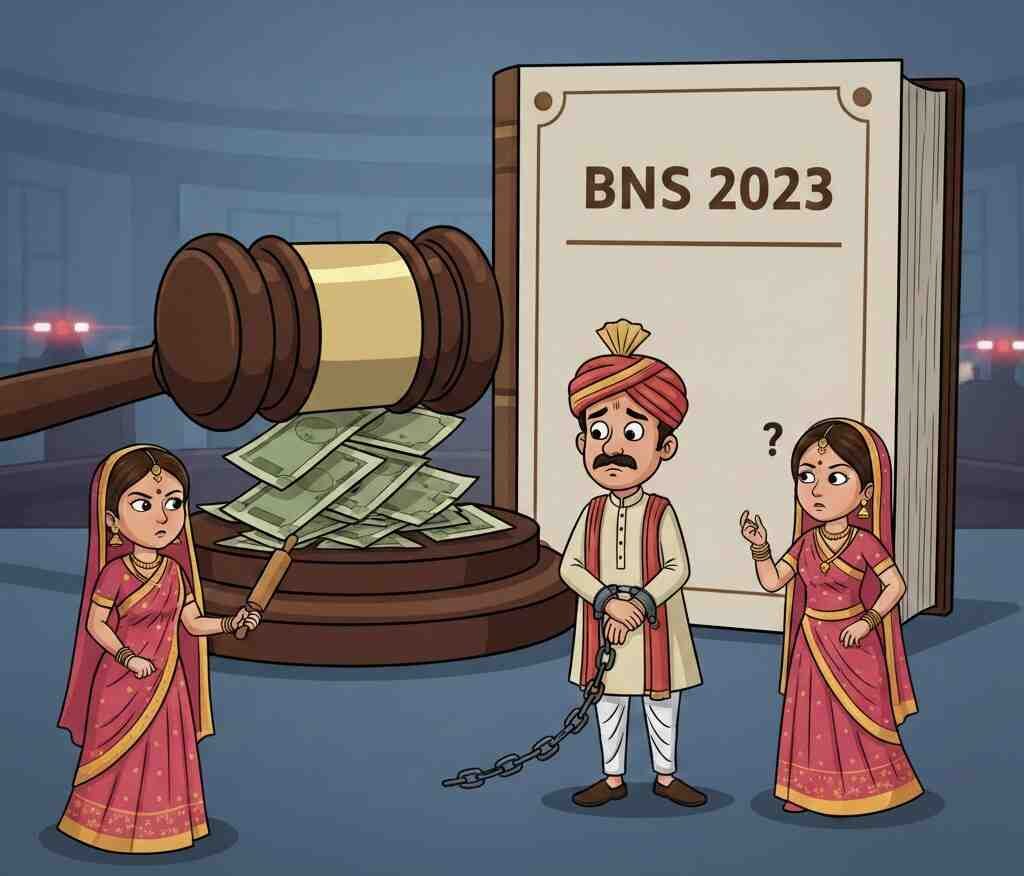
Matrimonial disputes often lead to criminal proceedings under Section 85 of the Bharatiya Nyaya Sanhita, 2023 (BNS), which has replaced the erstwhile Section 498A of the Indian Penal Code (IPC). Allegations relating to cruelty by the husband or his relatives are among the most commonly litigated issues in family law.
In many cases, parties subsequently arrive at an amicable settlement and seek mutual divorce. A common question that arises is whether the criminal proceedings and FIR can be quashed after compromise.
Indian High Courts, exercising powers under Section 528 BNSS (formerly Section 482 CrPC), and the Supreme Court of India have consistently held that criminal proceedings arising out of matrimonial disputes can be quashed to secure the ends of justice.
What is Section 85 BNS?
Section 85 of the Bharatiya Nyaya Sanhita, 2023 corresponds to the former Section 498A IPC and deals with:
Cruelty by Husband or Relatives
The provision punishes:
- Physical cruelty.
- Mental harassment.
- Dowry-related demands.
- Conduct likely to drive a woman to commit suicide.
- Wilful conduct causing grave injury.
Punishment Under Section 85 BNS
- Imprisonment up to three years.
- Fine.
Can an FIR Under Section 85 BNS Be Quashed?
Yes.
Even though offences under Section 85 BNS are generally non-compoundable, the High Courts possess inherent powers to quash criminal proceedings where:
- The dispute is purely matrimonial.
- Parties have settled their differences.
- A compromise deed has been executed.
- Continuation of proceedings would amount to abuse of the process of law.
Quashing of FIR After Compromise
Settlement between husband and wife is one of the most recognized grounds for quashing criminal proceedings.
Conditions Generally Considered by High Courts
Voluntary Settlement
The compromise must be genuine and without coercion.
Settlement Terms Have Been Fulfilled
Courts verify:
- Payment of alimony.
- Return of stridhan.
- Withdrawal of pending cases.
- Custody arrangements, if any.
Possibility of Conviction Is Remote
Where parties no longer wish to pursue the matter, continuation of prosecution serves no useful purpose.
Ends of Justice Require Quashing
The objective is to restore peace and avoid unnecessary litigation.
Mutual Divorce and FIR Quashing
Frequently, spouses decide to dissolve their marriage by mutual consent and simultaneously seek quashing of criminal proceedings.
Common Settlement Package Includes
- Mutual consent divorce under Section 13B of the Hindu Marriage Act, 1955.
- Permanent alimony.
- Return of jewellery and articles.
- Withdrawal of maintenance proceedings.
- Withdrawal of domestic violence cases.
- Quashing of FIR under Section 85 BNS.
Procedure for FIR Quashing After Settlement
Step 1: Execute a Settlement Agreement
The parties enter into a written compromise deed.
Step 2: File Petition Before High Court
A petition under Section 528 BNSS is filed seeking quashing of:
- FIR.
- Charge-sheet.
- Criminal proceedings.
Step 3: Appearance of Parties
The husband, wife, and investigating officer may appear before the Court for verification.
Step 4: Recording of Statements
The Court records statements confirming the settlement.
Step 5: Passing of Quashing Order
If satisfied, the High Court quashes the FIR and all consequential proceedings.
Supreme Court Judgments on Quashing of Matrimonial FIRs
Gian Singh v. State of Punjab (2012) 10 SCC 303
Principle Laid Down
The Supreme Court held that criminal proceedings arising out of matrimonial disputes may be quashed if parties have settled the matter and continuation of proceedings would be futile.
Significance
This judgment forms the foundation for quashing FIRs in matrimonial matters.
Narinder Singh v. State of Punjab (2014) 6 SCC 466
Principle
The Supreme Court laid down guidelines for exercising inherent powers to quash criminal proceedings after compromise.
Key Observation
Courts should promote settlement in disputes having overwhelmingly civil and matrimonial flavour.
B.S. Joshi v. State of Haryana (2003) 4 SCC 675
Landmark Judgment
The Supreme Court held that High Courts can quash proceedings under Section 498A IPC despite the offence being non-compoundable.
Importance
This case paved the way for settlement-based quashing in matrimonial disputes.
Jitendra Raghuvanshi v. Babita Raghuvanshi (2013) 4 SCC 58
Observation
The Court emphasized that matrimonial disputes deserve a pragmatic approach and settlements should be encouraged.
Parbatbhai Aahir v. State of Gujarat (2017) 9 SCC 641
Principle
High Courts possess inherent jurisdiction to secure justice and prevent abuse of process.
State of Madhya Pradesh v. Laxmi Narayan (2019) 5 SCC 688
Principle
Criminal proceedings involving personal disputes can be quashed when the matter has been amicably settled.
Grounds for Quashing FIR Under Section 85 BNS
High Courts generally quash proceedings when:
- Marriage has broken down irretrievably.
- Mutual settlement has been reached.
- Divorce by mutual consent has been granted.
- Permanent alimony has been paid.
- No useful purpose would be served by continuing criminal prosecution.
- Chances of conviction are bleak.
Documents Required for FIR Quashing
Typically, the following documents are required:
- Copy of FIR.
- Charge-sheet, if filed.
- Settlement agreement.
- Mutual divorce petition.
- Statements of parties.
- Proof of payment of alimony.
- Identity documents.
Benefits of Quashing Matrimonial FIRs
Avoids Prolonged Litigation
Parties can move forward peacefully.
Saves Judicial Time
Settlement reduces unnecessary criminal trials.
Promotes Reconciliation and Closure
It helps both spouses achieve finality.
Prevents Abuse of Process
The inherent powers of the High Courts ensure that criminal law is not used vindictively after settlement.
Conclusion
Section 85 BNS, which replaces Section 498A IPC, aims to protect married women from cruelty. However, where matrimonial disputes are settled amicably, Indian High Courts and the Supreme Court have consistently recognized the importance of restoring harmony and bringing litigation to an end.
By exercising powers under Section 528 BNSS, High Courts can quash FIRs and criminal proceedings after compromise, particularly when accompanied by mutual divorce and complete settlement between the parties. Landmark judgments such as B.S. Joshi, Gian Singh, Narinder Singh, and Jitendra Raghuvanshi continue to guide courts in balancing the interests of justice with the need for peaceful resolution of matrimonial disputes.
Frequently Asked Questions: Matrimonial Disputes: Quashing of FIR Under Section 85 BNS
Can an FIR under Section 85 BNS be quashed?
Yes. High Courts can quash FIRs under Section 85 BNS after a genuine settlement between the spouses.
Is Section 85 BNS the replacement of Section 498A IPC?
Yes. Section 85 of the Bharatiya Nyaya Sanhita, 2023 corresponds to the former Section 498A IPC.
Can FIR quashing and mutual divorce be done together?
Yes. Parties commonly seek mutual divorce and FIR quashing as part of a comprehensive settlement.