
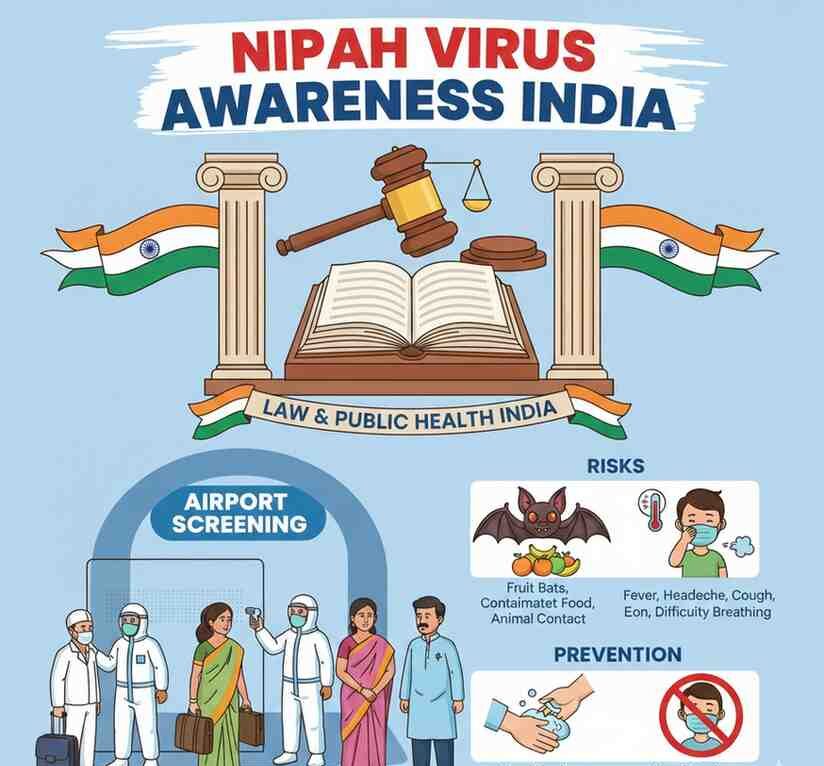
Nipah virus has drawn renewed public health attention in India due to enhanced screening at Asian airports. Learn about the Nipah virus, including its spread, symptoms, prevention tips, and airport screening measures.
What Is the Nipah Virus?
The Nipah virus (NiV) is zoonotic (spreads from animals to humans) first identified in 1998. It belongs to the Henipavirus genus and is known for causing severe respiratory illness and fatal brain inflammation (encephalitis) in humans.
The virus is naturally carried by fruit bats (Pteropus species), also known as flying foxes, without making them sick.
Why is the Nipah virus in the news in India?
Recent instances of heightened health screening at Asian airports have drawn attention to the Nipah virus, especially in countries such as India, which have experienced outbreaks in the past.
Although there has not been an outbreak, public health actions are being taken due to
- The high mortality rate
- Previous outbreaks in India
- Increased international travel
- The lack of a specific treatment or vaccine
Airport Screening Measures for Nipah Virus
To prevent cross-border transmission, health authorities may implement:
- Thermal screening to detect fever
- Health declaration forms for passengers
- Travel history assessment from affected regions
- Isolation and referral of symptomatic travelers
- Increased surveillance by airport health units
These steps are preventive, not panic-driven, and are part of routine global disease surveillance.
How Does Nipah Virus Spread?
Nipah virus spreads through:
Animal-to-human transmission
- Contact with infected bats or pigs
- Consumption of contaminated fruits or raw date palm sap
Human-to-human transmission
- Close contact with infected individuals
- Exposure to bodily fluids (saliva, urine, blood)
Hospital-acquired infections
- Without proper infection control practices
Symptoms of Nipah Virus Infection
Symptoms usually appear 5–14 days after exposure and may include:
Early Symptoms
- Fever
- Headache
- Muscle pain
- Sore throat
- Vomiting
Severe Symptoms
- Dizziness
- Confusion
- Drowsiness
- Breathing difficulty
- Encephalitis (brain swelling)
- Seizures and coma in severe cases
The mortality rate has ranged from 40% to 75% in past outbreaks.
Is There a Cure or Vaccine for Nipah Virus?
- No specific antiviral treatment
- No approved vaccine yet
- Treatment focuses on supportive care, such as:
- Managing symptoms
- Intensive care support
- Preventing secondary infections
Research on vaccines and monoclonal antibodies is ongoing.
Nipah Virus in India: Past Context
India has experienced localized Nipah outbreaks, mainly in southern states, which were successfully contained through:
- Rapid contact tracing
- Quarantine measures
- Public awareness campaigns
- Strong healthcare response
These experiences have improved India’s preparedness.
Prevention Tips for the Public
To reduce risk:
- Avoid eating partially eaten fruits
- Wash fruits thoroughly before consumption
- Avoid raw or unprocessed date palm sap
- Maintain hand hygiene
- Avoid close contact with people showing symptoms
- Follow health advisories when traveling
When Should You Seek Medical Help?
Seek immediate medical attention if you:
- Have fever and neurological symptoms
- Recently traveled from a high-risk area
- Had contact with a suspected or confirmed case
Early detection saves lives.
Conclusion:
The renewed emphasis put on screening for the Nipah virus in airports is a practical preparation by those in the healthcare industry, not panic. The Nipah virus is indeed dangerous, but awareness of the disease, as well as other preventative measures, can minimize the risks.
Frequently Asked Questions (FAQ): Nipah Virus Awareness in India
Is there a Nipah virus outbreak in India right now?
As of now, there is no confirmed nationwide outbreak. Screening measures are precautionary.
Can the Nipah virus spread through the air?
No. Nipah virus does not spread through airborne transmission like COVID-19. It requires close contact.