
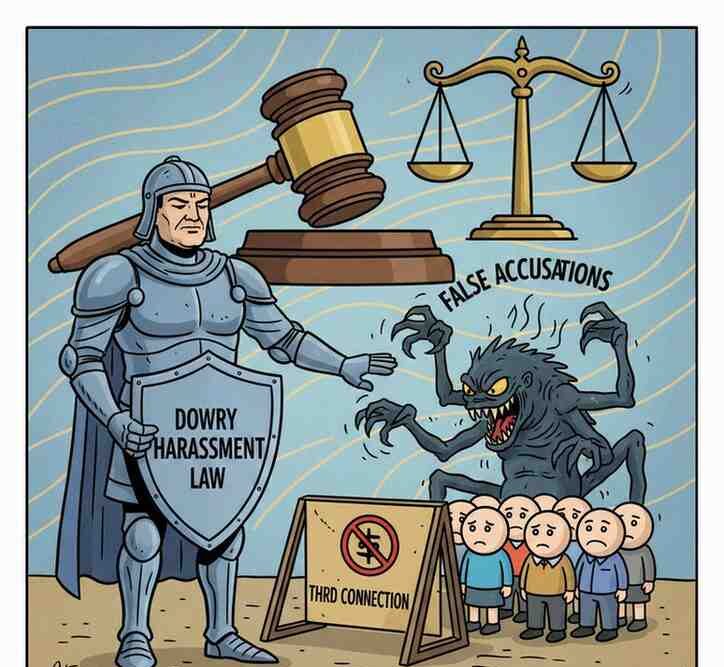
The Karnataka High Court has held that dowry harassment provisions cannot be misused to involve neighbours or strangers. The court has set aside the criminal case, thus further strengthening the safeguards against the abuse of Section 498A of the IPC in matrimonial disputes.
Introduction
Cutting across party lines, all major political parties have welcomed and hailed the judgment, saying it will ensure there is no misuse of criminal law. The court held that no neighbours, relatives, or even strangers can be easily dragged into matrimonial tiffs in the name of the dowry laws. This enforces the rights of innocent persons while upholding the need to protect married women from real cruelty.
Background of the Case
The case emanates from a matrimonial dispute wherein the wife had lodged a complaint in which she had alleged dowry harassment and mental cruelty. In addition to her husband and his family members, she also brought a neighbour under suspicion (against whom alleged poor circumstances were supplied on the initiative of harassment).
An FIR, which included section 498A (cruelty and harassment) of the IPC dealing with dowry demand, was lodged against him based on the complaint. The neighbour, who claimed to have no blood or matrimonial relation with the couple, then moved the Karnataka High Court for relief.
Key highlights of Karnataka High Court’s observations
Dowry Law is Applicable to Husband and Relatives Only
The higher court made it very clear that Section 498A IPC is narrow in its scope. It applies only to:
- The husband, his family by blood, marriage, or adoption
Vague Allegations Are Not Enough
The court pointed out that vague and uncorroborated allegations fetch no cause for prosecuting an unrelated person alleging his “instigation” or “support.” You can’t start criminal law with unverified, non-credible, and legally unsound allegations.
Misuse of Dowry Laws is a Big Thing culpable under IPC
The High Court recognized that dowry laws are necessary to serve an important social purpose, but cautioned that overuse of such provisions will result in undermining justice. Dragging innocent people into crime records is an act of abuse of process, and it inflicts unnecessary pain.
Final Verdict
Based on facts and law, the High Court of Karnataka:
- After examining the facts and legal principles, the Karnataka High Court:
- Quashed the criminal proceedings against the neighbour
- Held that continuing the case would be unjust and legally unsustainable
- Clarified that the ruling does not affect proceedings against the husband or genuine family members, if supported by evidence
Why This Judgement Is Important
- Protects Innocent Citizens
The decision protects neighbour and strangers from being harassed by false and exaggerated complaints. - Prevents Weaponization of Law
It is to deter the use of dowry laws as leverage and a weapon in personal disputes in marriage. - Ensures the Fair Administration of Civil and Criminal Justice
The ruling upholds the idea that criminal laws are to be construed narrowly, particularly when individual freedom is at issue.
Effect on Subsequent Dowry Harassment Cases
This decision is likely to:
- Encourage police and courts to vet complaints better
- Result in fewer false accusations by third parties
- Encourage the sensitive implementation of laws protecting women
It communicates a powerful message that justice needs to protect the cruelly treated as well as innocent people.
FAQs on Misuse of Section 498A Compiled by Karnataka High Court
What was the key ruling of the Karnataka High Court in this case?
The Karnataka High Court ruled that dowry harassment laws, particularly Section 498A of the IPC, cannot be applied to neighbours or unrelated individuals. The court quashed criminal proceedings against a neighbour who was wrongly implicated in a matrimonial dispute.
What is Section 498A of IPC all about?
498A deals with the cruelty of a married woman by her husband or relatives by keeping demand of dowry from her.
Can neighbours be charged under dowry harassment laws?
No. The Karnataka High Court clarified that neighbours or unrelated persons could not be covered under Section 498A, since said persons do not form the subject matter of the legal definition of qualifying relations.
How did the court exempt neighbours in dowry harassment cases?
The court also explained that the provision of section 498A is embargoed against the husband or in-laws of the victim. As between the neighbours and the husband, they are not related to him within the meaning of the provision.