
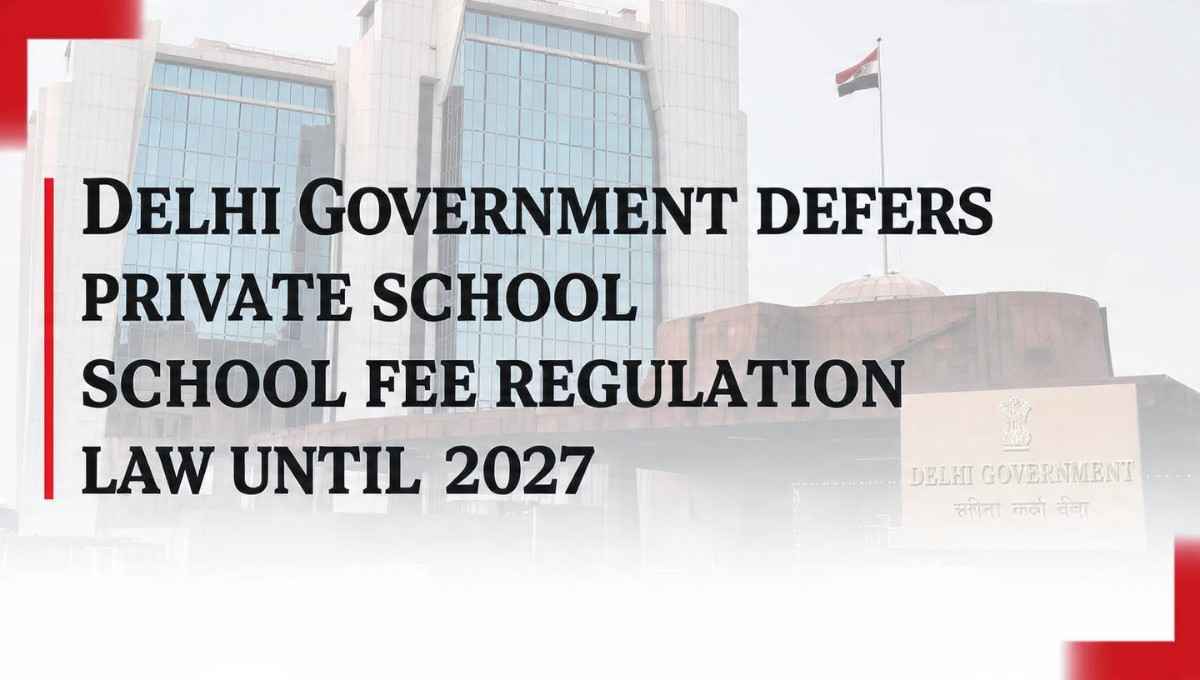
Delhi government postpones the Delhi School Education Fee Regulation Act until 2027. Find out what this means for private schools, parents, fee transparency, and future audits.
What’s Happening with Delhi’s Fee Regulation Law?
The Delhi government has deferred the application of the Delhi School Education (Transparency in Fixation and Regulation of Fees) Act, 2025 for private schools until 2027. This is following a request from private schools to the Supreme Court to defer the application of the Act until the 2025-26 academic year.
The government has, however, clarified that the Act is still in place but requires some procedural modifications for easy application.
Through a gazette notification on February 1, 2026, the government has clarified that no school is supposed to charge more than what was charged on April 1, 2025. This is in relation to the current academic year, and any amount overcharged will be subject to review and modification through legal means.
The Supreme Court has ruled that it would be “unviable” to apply the Act in the middle of the academic year.
Key Points of the Decision
Implementation Delay
- Schools are not required to implement new fee policies until 2027.
- The formation of School Level Fee Regulation Committees (SLFRCs) has a new deadline, which reduces administrative burdens.
Government Guarantee
- The act is in no way affected and will come into force once procedural matters, which have been raised by the courts, are clarified.
- No school can set fees without SLFRCs.
Parental Grievances
- Parents demand financial audits, particularly for schools on DDA land.
- Parents demand clarity on fee policies for 2024-25 and 2025-26.
- Some parents felt they were not adequately involved in school fee committees.
School Administration Reaction
- This is a “pragmatic pause,” not a reversal, according to principals.
- The pause gives schools and parents time to understand the law and engage constructively.
What This Means for Parents and Schools
For Parents
- Fee hikes are paused for now, but stay alert about past fees.
- Push for transparent audits and public disclosure of fee structures.
- Participate actively in SLFRCs to ensure fairness.
For Schools
- Relief from mid-session compliance pressure.
- Time to prepare for full implementation post-2027.
- Must align fee structures with the law once procedural issues are resolved.
Why the Law Was Deferred
The Delhi government and Supreme Court cited several reasons:
- Late Notification:
The law was notified only on December 10, 2025, making the original July 15 SLFRC deadline impractical. - Avoiding Mid-Session Confusion:
Implementing new fees mid-year could create financial strain for both schools and parents. - Procedural Hurdles:
Courts highlighted challenges in forming fee regulation committees and governance structures.
What Stakeholders Are Saying
- Alka Kapur, Principal, Modern Public School:
“This deferral allows space for a detailed examination of the law and constructive participation of all stakeholders.” - Aprajita Gautam, President, Delhi Parents’ Association:
“Immediate uncertainty is removed, but retrospective scrutiny and financial audits are crucial.” - Ashish Sood, Delhi Education Minister:
“No school in Delhi will be able to make decisions about fees without forming fee regulation committees.”
FAQs on Delhi Fee Regulation Law Deferral
What is the Delhi School Education Fee Regulation Act?
The 2025 Act regulates private school fees, ensures transparency, and prevents arbitrary hikes. SLFRCs oversee fee approvals.
Why has implementation been deferred?
Late notification, procedural challenges, and potential mid-session disruptions have pushed the law’s enforcement to 2027.
Can schools increase fees for 2025-26?
No. Fees cannot exceed what was charged from April 1, 2025. Excess will be reviewed legally.
How can parents ensure transparency?
Demand audits, review approved fee structures, and actively participate in SLFRC meetings.
Conclusion
The deferral of Delhi’s fee regulation law until 2027 gives schools temporary relief and gives parents time to demand greater transparency. While the law is still in force, financial audits, public disclosure, and active participation in committees will be key to fair fee fixation. Both schools and parents now have a window to adapt, analyze, and prepare for the law’s full implementation.