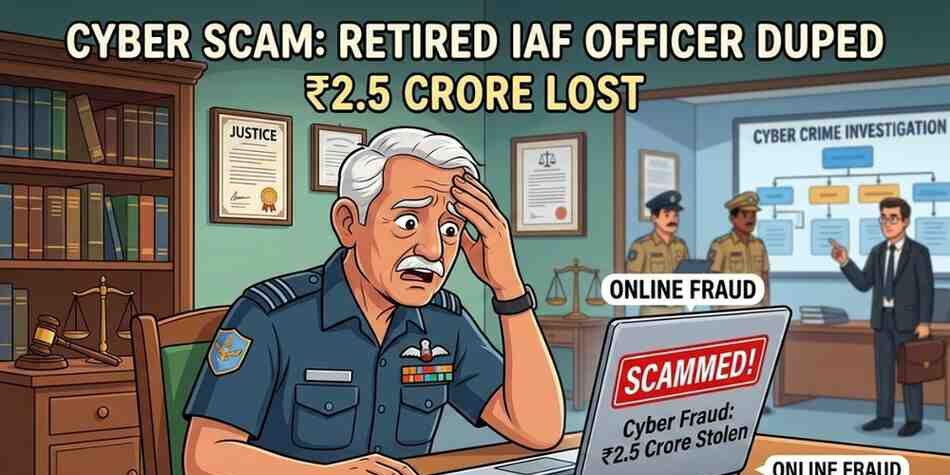
A 92-year-old retired Indian Air Force officer from Gwalior lost ₹2.5 crore in a shocking “digital arrest” cyber scam.
Introduction
In a disturbing case highlighting the rising threat of cybercrime in India, a 92-year-old retired officer of the Indian Air Force from Gwalior was allegedly duped of ₹2.5 crore in a sophisticated “digital arrest” scam. Fraudsters posing as law enforcement officials manipulated and intimidated the elderly veteran into transferring large sums of money under the pretext of a fake criminal investigation.
The incident has sparked nationwide concern over the growing menace of impersonation-based cyber frauds targeting senior citizens.
What Is a “Digital Arrest” Scam?
A “digital arrest” scam is a type of cyber fraud in which criminals impersonate officials from agencies such as:
- Police departments
- Central investigative agencies
- Telecom regulatory bodies
- Income tax authorities
The fraudsters contact victims via phone or video call and falsely claim that:
- The victim’s phone number is linked to illegal activities.
- Their bank account is involved in money laundering.
- A parcel in their name contains contraband.
- A warrant has been issued for their arrest.
Victims are then told they are under “digital surveillance” or “digital arrest” and must transfer funds for verification or to avoid immediate physical arrest.
How the Gwalior Scam Allegedly Unfolded
According to reports, the retired Air Force officer received a call from individuals claiming to be law enforcement officials. The scammers reportedly:
- Accused him of being linked to illegal financial transactions.
- Claimed that a case had been registered in his name.
- Threatened immediate arrest and legal consequences.
- Instructed him to remain isolated during the “investigation.”
- Directed him to transfer money to specific bank accounts for “verification.”
Due to sustained psychological pressure and fear of legal trouble, the elderly victim allegedly transferred ₹2.5 crore in multiple transactions before realizing he had been deceived.
Why Senior Citizens Are Targeted
Cybercriminals often target elderly individuals for several reasons:
Psychological Vulnerability
Senior citizens may feel intimidated by authority figures, especially those claiming to represent police or government agencies.
Limited Digital Awareness
Many older individuals are less familiar with modern cyber fraud tactics.
Financial Stability
Retired defense officers and professionals may have substantial savings or pension funds.
Social Isolation
Fraudsters often instruct victims not to share information with family members, increasing vulnerability.
The Role of Impersonation in Cybercrime
Impersonation scams have become increasingly sophisticated. Fraudsters now:
- Use spoofed phone numbers to display official-looking caller IDs.
- Create fake ID cards and share them via WhatsApp.
- Conduct video calls in rooms staged to resemble police stations.
- Use legal terminology to sound credible.
Such tactics create an illusion of legitimacy, making it difficult for victims to detect fraud.
Legal Framework Governing Cyber Fraud in India
Cases like this are typically registered under:
- Sections of the Information Technology Act, 2000
- Relevant provisions of the Bharatiya Nyaya Sanhita (BNS)
- Cheating and impersonation provisions under criminal law
Authorities may also involve specialized cybercrime cells for investigation.
The Indian government has established the National Cyber Crime Reporting Portal, allowing victims to file complaints online.
Psychological Manipulation Techniques Used
The “digital arrest” scam relies heavily on fear and urgency. Common tactics include:
- Threat of arrest within hours
- Claiming bank accounts will be frozen
- Accusing victims of serious crimes like terrorism or money laundering
- Continuous monitoring through video calls
- Forcing victims to stay on call for extended hours
This method creates panic and suppresses rational decision-making.
Financial Impact and Recovery Challenges
Recovering money lost in cyber fraud cases can be difficult because:
- Funds are quickly transferred across multiple accounts.
- Money may be converted into cryptocurrency.
- Fraud networks operate across states or internationally.
However, early reporting increases the chances of freezing fraudulent accounts.
Rising Cybercrime in India
India has seen a significant rise in cyber fraud complaints in recent years. The expansion of digital banking, UPI payments, and smartphone usage has increased convenience but also created new vulnerabilities.
Scams involving:
- Fake KYC updates
- Investment fraud
- Job offer scams
- Parcel interception scams
- Digital arrest fraud
are becoming increasingly common.
Preventive Measures: How to Stay Safe
No Police Authority Demands Money Over Phone
Law enforcement agencies do not demand money to avoid arrest.
Verify Independently
Disconnect the call and contact the official department directly using verified contact details.
Never Share OTP or Bank Details
Government officials will never ask for OTPs, PINs, or confidential banking information.
Inform Family Members
Always discuss suspicious calls with trusted relatives.
Report Immediately
Dial 1930 (India’s cybercrime helpline) or report online at the national cybercrime portal.
Social and National Reaction
The case involving a retired defense officer has drawn widespread attention because it highlights that even disciplined and experienced individuals can fall victim to high-pressure cyber tactics.
It has renewed calls for:
- Stronger public awareness campaigns
- Improved cyber literacy among senior citizens
- Faster banking response mechanisms
- Stricter digital fraud tracking
Broader Implications
This case serves as a wake-up call for:
- Financial institutions to improve fraud detection systems
- Telecom companies to curb spoofed calls
- Families to ensure elderly members are informed about cyber risks
As India advances digitally, cyber security awareness must grow at the same pace.
Conclusion
The cyber scam involving the retired Indian Air Force officer is a stark reminder of the evolving sophistication of digital fraud in India. As criminals adopt advanced impersonation techniques, awareness and vigilance become the strongest defenses.
While authorities continue to strengthen cybercrime enforcement, public education and quick reporting remain critical. This case underscores that no one — regardless of background or experience — is immune to cyber deception.
Digital convenience must always be balanced with digital caution.
Frequently Asked Questions: Cyber Scam: Retired IAF Officer Duped of ₹2.5 Crore
What happened in the Gwalior cyber scam case?
A 92-year-old retired Indian Air Force officer from Gwalior was allegedly duped of ₹2.5 crore by fraudsters posing as law enforcement officials in a “digital arrest” scam.
What is a digital arrest scam?
It is a cyber fraud where scammers falsely claim that a victim is under investigation or arrest and demand money for verification or to avoid legal action.
Are such scams common in India?
Yes, digital arrest and impersonation scams are increasingly reported across multiple states.
What should someone do if they receive such a call?
Immediately disconnect, verify through official sources, inform family members, and report the incident via the cybercrime helpline (1930).