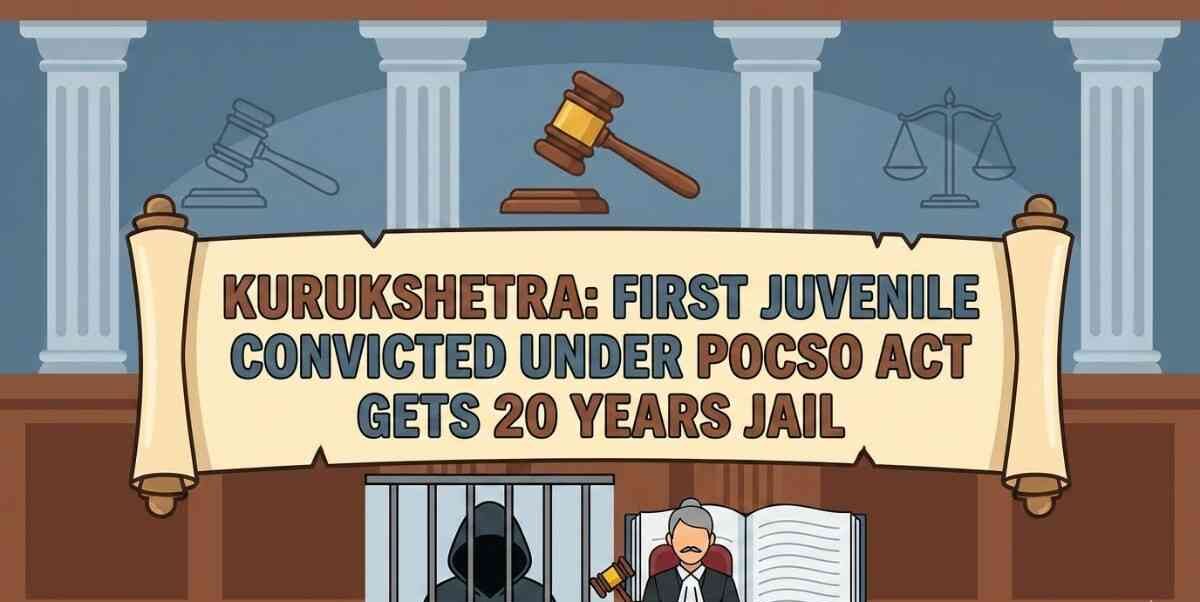
A Kurukshetra fast-track court has awarded 20 years of rigorous imprisonment to a minor under the POCSO Act. Here’s a closer look at the case, the laws that were used to prosecute those responsible, the punishment they received, and what it says about India’s justice system.
Introduction
In a landmark judgment that highlights the gravity of crimes committed against children, a special fast-track court in Kurukshetra, Haryana, has awarded 20 years’ rigorous imprisonment to a juvenile boy under the POCSO Act. The conviction, which stemmed from the sexual abuse of another minor, underscores what the judiciary has described as a zero-tolerance approach to child sex offenses—regardless of how old the perpetrator is. The ruling has sparked national debate over juvenile justice, accountability, and the stern enforcement of child-protection laws in India.
Case Background
The trial was held by a fast-track POCSO court, established to expedite child sexual abuse cases.
Key Case Details:
- Location: Kurukshetra, Haryana
- Court: Fast-Track Special POCSO Court
- Accused: Minor boy
- Victim: Minor child
- Charge: Offence under the POCSO Act for sexual assault
- Sentence: 20 years of rigorous imprisonment
- Penalty: Monetary fine with additional imprisonment for non-payment
After reviewing medical evidence, witness statements, and the prosecution’s arguments, the court determined that the crime qualified as aggravated sexual assault, meriting the maximum punishment possible.
Why Was Such a Stiff Sentence Imposed on a Minor?
Although the accused was a juvenile, the court applied provisions that allow for harsher punishment in cases where heinous crimes cause lasting trauma to victims.
Legal Standpoint:
- Heinous crimes such as aggravated sexual assault demand severe punishment.
- Minors may be tried as adults based on the brutality of the offence.
- The POCSO Act prioritizes the child victim’s best interests.
The judge noted that age cannot serve as protection when an offender’s actions deeply violate a child’s dignity and safety.
Understanding the POCSO Act
Passed in 2012, the POCSO Act protects children under 18 from sexual offences, exploitation, and harassment.
Key Features:
- Gender-neutral law
- Mandatory reporting of child sexual abuse
- Child-friendly investigations and trials
- In-camera proceedings to protect the victim’s identity
- Harsh penalties, including long-term imprisonment
Punishment Provisions:
- Minimum imprisonment: 10 years
- Maximum punishment: Life imprisonment or death (in extreme cases)
- Additional penalty: Monetary fine
The Role of Fast-Track Courts in POCSO Cases
Fast-track courts ensure timely justice and minimize trauma for victims.
Importance of Fast-Track Courts:
- Deliver judgments swiftly
- Prevent prolonged psychological suffering
- Strengthen public trust in the justice system
- Act as a deterrent to potential offenders
The Kurukshetra court’s rapid and compassionate handling of this case shows how effectively fast-track courts can function.
Implications of the Judgment
- Strong Deterrent: The verdict sends a clear message that crimes against children will be punished regardless of the offender’s age.
- Accountability Over Age: The court reinforced that accountability depends on the severity of the offence, not the offender’s age.
- Victim-Centric Justice: The decision recognizes the victim’s lifelong trauma, staying true to the POCSO Act’s protective intent.
- Raising Awareness: The judgment highlights the need for:
- Comprehensive sex education
- Awareness about consent and boundaries
- Early intervention and rehabilitation for at-risk youth
Juvenile Justice vs. Child Protection: Finding the Balance
The case reignites the debate on whether minors accused of heinous crimes should be tried as adults. Courts now strive to balance rehabilitation with safety—reform is important, but it cannot come at the expense of justice or victim protection.
Each case must be assessed individually based on the offender’s intent, the crime’s severity, and the victim’s suffering.
Conclusion
The Kurukshetra fast-track court’s decision to sentence a minor to 20 years under the POCSO Act marks a critical moment in India’s fight for child protection. It shows that justice will prevail regardless of age and reaffirms the country’s commitment to ending child sexual abuse. This ruling not only strengthens faith in the legal system but also underlines the importance of education, awareness, and prevention.
Frequently Asked Questions (FAQs): Minor Sentenced Under POCSO Act
Can a minor be sentenced to 20 years in jail under the POCSO Act?
Yes. While the Juvenile Justice Act focuses on reform, Indian courts can impose severe punishment for heinous offences, including aggravated sexual assault under the POCSO Act. In exceptional cases, minors may face long-term imprisonment depending on the gravity of the crime.
What is the POCSO Act, and why is it strict?
The Protection of Children from Sexual Offences (POCSO) Act, 2012 is a special law enacted to protect children below 18 years from sexual abuse and exploitation. It is strict because it prioritizes child safety, dignity, and psychological well-being, with stringent punishments to deter offenders.
Is the POCSO Act applicable when both the victim and the accused are minors?
Yes. The POCSO Act is victim-centric. It applies regardless of the age of the accused, focusing on the protection and justice of the child victim.