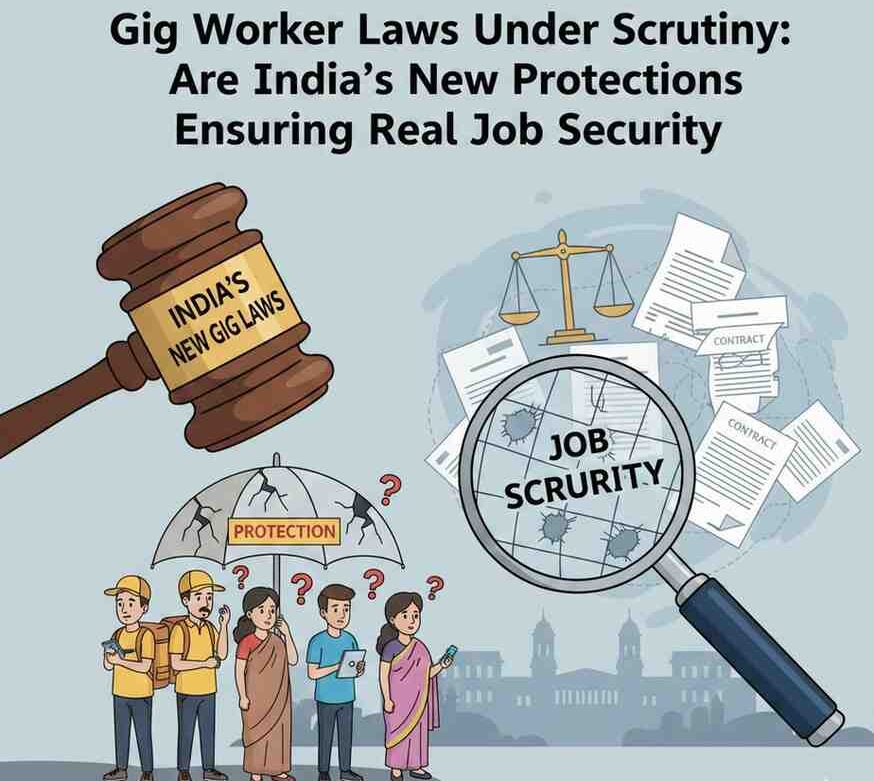
Protections for gig workers—India has implemented laws protecting the rights of gig workers in four states, but protests and ground reality raise questions about their efficacy.
Introduction
India’s gig economy has expanded rapidly over the past decade, on the back of app-based platforms for ride-hailing services, food delivery apps, e-commerce logistics firms, and freelance marketplaces. Millions of workers now rely on gig work for their livelihood. Acknowledging this transformation, four Indian states have passed laws protecting gig workers to provide social security and welfare benefits. But even with such legal interventions, gig workers across the country are protesting their lack of decent pay, job security, and real social protection. This has ignited a crucial debate: do gig worker laws in India work on the ground, or are they falling short of promises?
Making Sense of Gig Worker Laws in India
Gig workers are generally considered independent contractors, not employees. This categorization has previously denied them labour protections, including minimum wages, provident fund benefits, health insurance, and paid leave. To fill this lacuna, certain Indian states have brought out laws tailor-made for gig and platform workers.
These laws generally aim to:
- Build welfare boards for gig workers
- Require platform companies to contribute to social security funds
- Offer benefits such as insurance against accidents, medical coverage, and pensions
- Establish official registries of gig workers
Although these efforts are steps in the right direction, they concentrate more on welfare programs than labor rights, as many have pointed out.
Why Are Gig Worker Laws Being Criticized?
Even as these laws are introduced, the challenges facing gig workers remain stark. The difference between policy intent and on-the-ground impact has heightened disillusionment.
Limited Coverage and Implementation Gaps
Many gig workers are not aware of or don’t understand the technology needed to enroll in welfare programs. In many instances, welfare boards exist only on paper, often with little budget or manpower.
No Guarantee of Minimum Wages
Gig workers have no minimum wage guarantee under most state laws. Earnings remain sporadic, driven by algorithms, incentives, and fluctuating demand. Workers report earning less even as their working hours increase.
Employment Status Remains Unclear
Gig workers are still not considered “employees.” That means platforms aren’t forced to provide conventional labour protections like job security, overtime pay, or paid leave. Unclear status makes enforcement difficult.
Social Security Benefits Are Inadequate
Although laws offer social security, they’re often inadequate or vague. Health insurance coverage may not be comprehensive, pension systems require long contribution periods, and compensation for work-related injuries can be unclear.
Weak Accountability of Platform Companies
Platform companies wield significant control over work conditions, but many laws place minimal obligations on them. Contribution levels to welfare funds are often low, and transparency about how funds are collected or spent is lacking.
Protests and Worker Demands
Gig workers in India have staged strikes and protests to highlight these shortcomings. Common demands include:
- Fair and transparent wage structures
- Lower commission fees on platforms
- Recognition as workers with basic labour rights
- Stronger social security and health coverage
- Safeguards against arbitrary deactivation from platforms
These protests show that even welfare-focused laws may not adequately protect gig workers in a competitive, algorithm-driven environment.
Policy Intent vs Real Impact
The motivation for gig worker laws is largely progressive. Policymakers recognize that the gig economy is here to stay, and workers need protection. However, the real impact has been limited by weak enforcement, narrow scope, and lack of worker participation in decision-making.
Most laws treat gig work as a side job, but for many workers, it’s their main source of income. This misalignment affects policy design and implementation.
What to Do Next: How Can the System Be Reformed?
To make gig worker laws effective, several reforms are needed:
- Clear Legal Classification
Create a middle category between employee and contractor to give gig workers core labour protections without removing platform flexibility. - Minimum Earnings Standards
Set minimum pay benchmarks tied to working hours, fuel costs, and inflation. - Stronger Platform Accountability
Mandate transparent algorithms, fair deactivation policies, and higher social security contributions. - National-Level Framework
A central law could reduce state-level disparities and ensure uniform protection across India. - Worker Representation
Include gig worker unions and associations in welfare boards and policy-making.
Conclusion
India’s gig worker protection laws are a step in the right direction, but they’re not yet providing meaningful security for workers. Ongoing protests and dissatisfaction point to deeper structural problems in gig work regulation. Without stronger enforcement, clearer rights, and greater accountability for platform companies, these laws could end up being symbolic rather than transformative. For India’s gig economy to be sustainable and fair, legal reforms must go beyond welfare schemes and engage with the real challenges of gig work.
Frequently Asked Questions (FAQs) on Gig Worker Laws in India
What are gig worker protection laws in India?
Gig worker protection laws are legal frameworks introduced by certain Indian states to provide social security and welfare benefits to workers engaged in platform-based or short-term contractual work. These laws aim to address the lack of traditional labour protections for gig and platform workers.
Do gig worker laws guarantee minimum wages?
No, most current gig worker laws don’t guarantee minimum wages—they focus mainly on welfare schemes.
Are gig workers considered employees under Indian law?
In most cases, gig workers are still classified as independent contractors, which limits their labour rights.