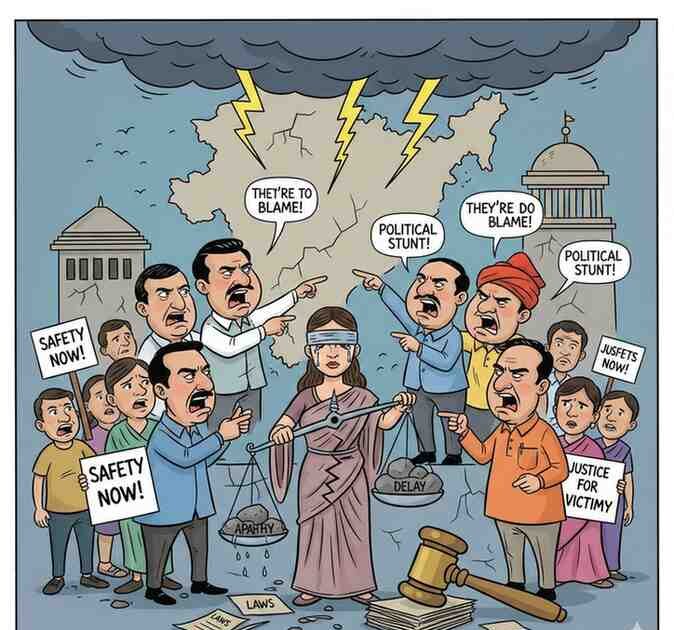
A brutal gang rape in Faridabad has reignited debate over Haryana’s deteriorating law and order. Explore detailed insights into the case, political fallout, police lapses, and the broader impact on women’s safety.
Haryana Gang-Rape Case: Law and Order Failures Under National Spotlight
A horrifying gang rape in Faridabad, Haryana, has triggered widespread outrage, drawing national attention to women’s safety and police accountability. Political leaders have condemned the act as “brutal” and “inhuman,” questioning the government’s failure to maintain basic law and order.
As anger spreads, opposition parties and women’s rights groups are demanding fast-track justice, structural reforms, and stronger preventive measures to protect women from similar atrocities.
Incident Overview
According to initial police reports, the survivor was allegedly deceived under the guise of help and then sexually assaulted inside a moving vehicle. After the attack, she was abandoned on the roadside in critical condition.
The cruelty of the crime—from its setting to the brutality involved—has heightened fear among women and sparked urgent calls for stronger safety protocols, especially for those traveling alone.
Police have arrested the accused and stated that the investigation is ongoing.
Political Reactions: Government Under Fire
Opposition Criticizes State Administration
Several senior opposition leaders visited the survivor’s family, accusing the Haryana government of failing to maintain law and order. They argued that the crime reflected a growing sense of lawlessness, particularly in cities and semi-urban regions.
Many opposition figures added that such incidents are not isolated lapses but indicators of deep-rooted weaknesses in policing and governance.
Demand for Swift Justice
Leaders across party lines have called for
- Fast-track court proceedings
- Harsh punishment for the accused
- Immediate financial and medical support for the survivor
They stressed that delayed justice emboldens offenders and weakens deterrence, undermining public faith in the legal system.
Women’s Safety: The Center of Public Debate
The Faridabad case has once again exposed the gap between government assurances and reality. Many critics argue that safety programs often remain on paper, with little visible enforcement or accountability at the ground level.
Why This Case Matters Nationally
Rising Concern About Crimes Against Women
Violence against women remains a grave national issue. High-profile cases like this one underscore the urgent need for preventive policing, safer transportation, and stronger community vigilance.
Declining Trust in Law Enforcement
Despite existing laws, the recurrence of such crimes erodes public confidence in the police. Citizens are increasingly questioning patrol efficiency, response times, and the absence of transparency in investigations.
Political Accountability
Law and order are a state responsibility. This case has become a litmus test for Haryana’s administrative performance and political accountability.
Police and Administrative Response
Authorities have confirmed:
- The arrest of the accused
- Full medical care and security for the survivor
- A commitment to a time-bound and transparent investigation
However, critics argue that reactive measures are not enough—long-term reform, community awareness, and proactive policing are essential to prevent future incidents.
Legal Perspective: What Lies Ahead
The accused faces charges under sections related to:
- Gang rape
- Criminal assault
- Criminal intimidation
Legal experts emphasize that faster investigations, proper evidence preservation, and prompt trials significantly improve conviction rates in sexual assault cases.
Frequently Asked Questions
Why has this case triggered strong political reactions?
Because of its brutality and the public setting, leaders view it as proof of Haryana’s collapsing law and order.
Has the accused been arrested?
Yes. Police have apprehended the accused and begun legal proceedings.
Conclusion
The Faridabad gang-rape case has evolved into more than a criminal matter — it’s now a mirror reflecting public frustration over women’s safety and government accountability in Haryana. The coming months will determine whether this tragedy sparks genuine reforms or fades into another statistic of negligence and delay.