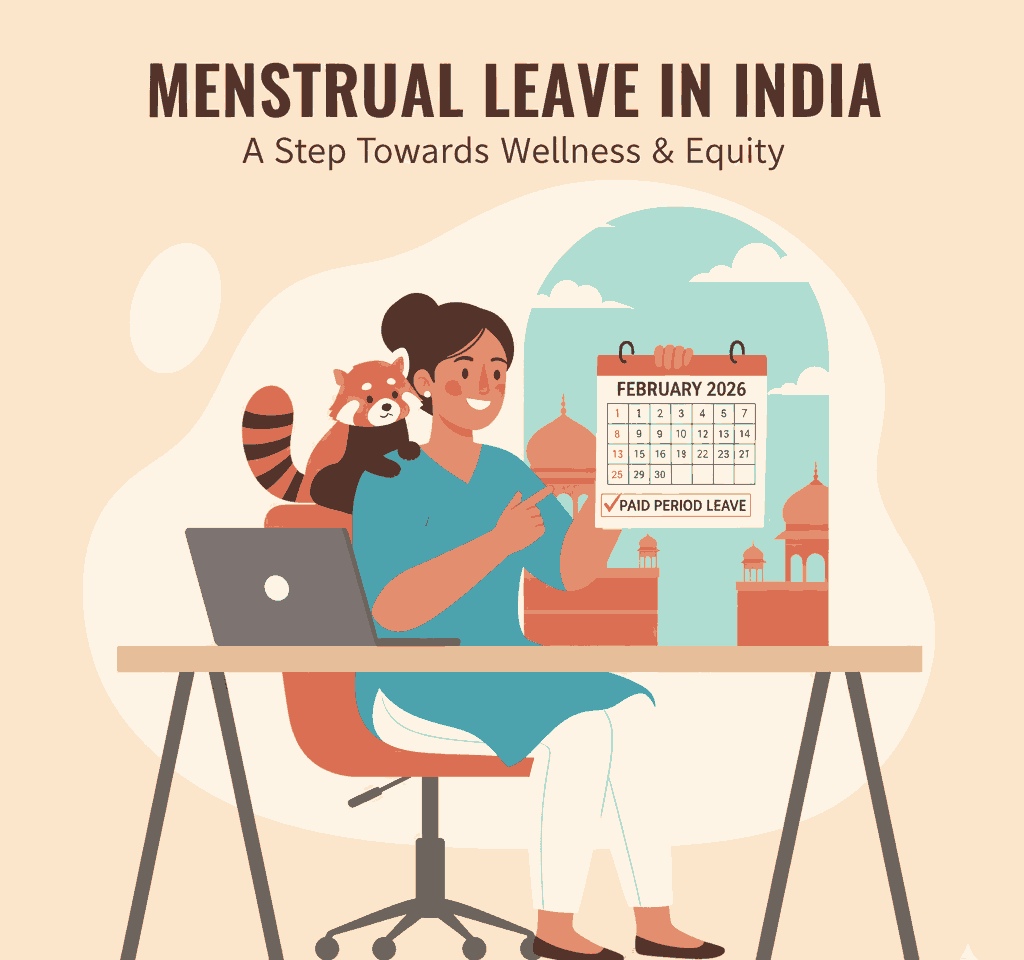
Did you know? Period leave could soon become a legal right in India:In a historic verdict on January 30, 2026, the Supreme Court of India held that menstrual health and hygiene form a part of the fundamental right to Life under Article 21 of the Constitution. This decision has sparked off an all-India debate on period leave, workplace laws and a woman’s dignity.
What Did the Supreme Court Say?
Menstrual Health Is a Fundamental Right
Supreme Court explained the Right to Life under Article 21 is much more than mere survival, the right encompasses health, dignity, hygiene, and access to basic facilities.
Menstrual hygiene, the Court remarked, is a necessity for dignified life especially for adolescent girls and women.
Mandatory Facilities in Schools
The court ruled that all schools (government and private) must facilitate:
- Free sanitary pads (preferably biodegradable)
- Functional, clean, and gender, segregated toilets
- Safe disposal systems for menstrual waste
- Water, soap, and privacy for menstruating students
Failure to comply may lead to strict measures such as withdrawal of recognition.
Menstrual Education in Curriculum
The ruling by the court additionally highlighted that:
- Education on menstruation and puberty ought to be included in the school syllabus.
- Educators need to be prepared for communicating the theme of menstruation in a very understanding manner.
- Through campaigns breaking of the circle of mutually enforced period, related social taboo should be achieved. It is clear that such steps would be most effective if the whole student body, boys and girls alike, were included.
This should help understanding and reduce the stigma.
The Big Question: Is Period Leave Now a Legal Right?
Not yet—but we are closer than ever.
The Supreme Court has not directly legalized paid menstrual leave as a basic right. However, by recognizing the issue of menstrual health as part of Article 21, the Court has laid a strong constitutional foundation for future legislation or authorities to come up with period leave policies.
Why This Judgment Is a Game Changer
Governments (Centre & States) have the responsibility to develop uniform national standards.
Workplaces might be compelled to come up with menstrual, friendly policies, which could include options for rest, flexibility, or leave.
Many state governments and private sector companies have already introduced menstrual leave as part of their employee benefits, and this judgment gives a huge boost to the legal argument for making this the case nationwide.
Impact on Workplaces
It is quite interesting that although the main concentration of the ruling was schools, the constitutional reasoning behind the decision equally extends to other sectors. Experts think this might eventually result in:
Clearly defined rules for menstrual leave Sanitary facilities being a must at workplaces Menstrual health being officially recognized as part of labour and occupational safety standards To recap, work, life balance and womens rights have moved beyond being considered as mere activism. Now, they are backed by constitutional logic.
Why This Matters for Women’s Rights
- Decreases female absenteeism and dropouts in schools
- Treats menstrual stigma as a human rights violation
- Changes the story from the advantage to the right
- Incorporates feminist equality as part of the constitutional law
FAQs: Menstrual Leave in India
Has the Supreme Court made period leave compulsory in India?
No. The Supreme Court of India has not yet made it mandatory for employers to grant period leave. But it has recognized menstrual health as a basic human right under Article 21 which is the right to life. This means that the ruling has laid the foundation for future period leave laws.
What was the real Supreme Court ruling on menstrual health?
The Court ruled that menstrual hygiene is a part of the Right to Life and dignity protected under Article 21, and hence, they have issued a directive to the authorities to ensure free sanitary pads and proper facilities are made available in schools.
Are private offices going to be affected by the ruling?
Only indirectly. The directive, after all, is for the schools only but the constitutional interpretation of the Court can be utilized to advocate for fresh workplace menstrual, friendly policies such as the leave of menstruation.
Why is this judgment regarded as historic?
Because it was the first time the Supreme Court directly connected menstrual health, dignity, and hygiene with fundamental rights thus it was a mere welfare issue that got a constitutional status.