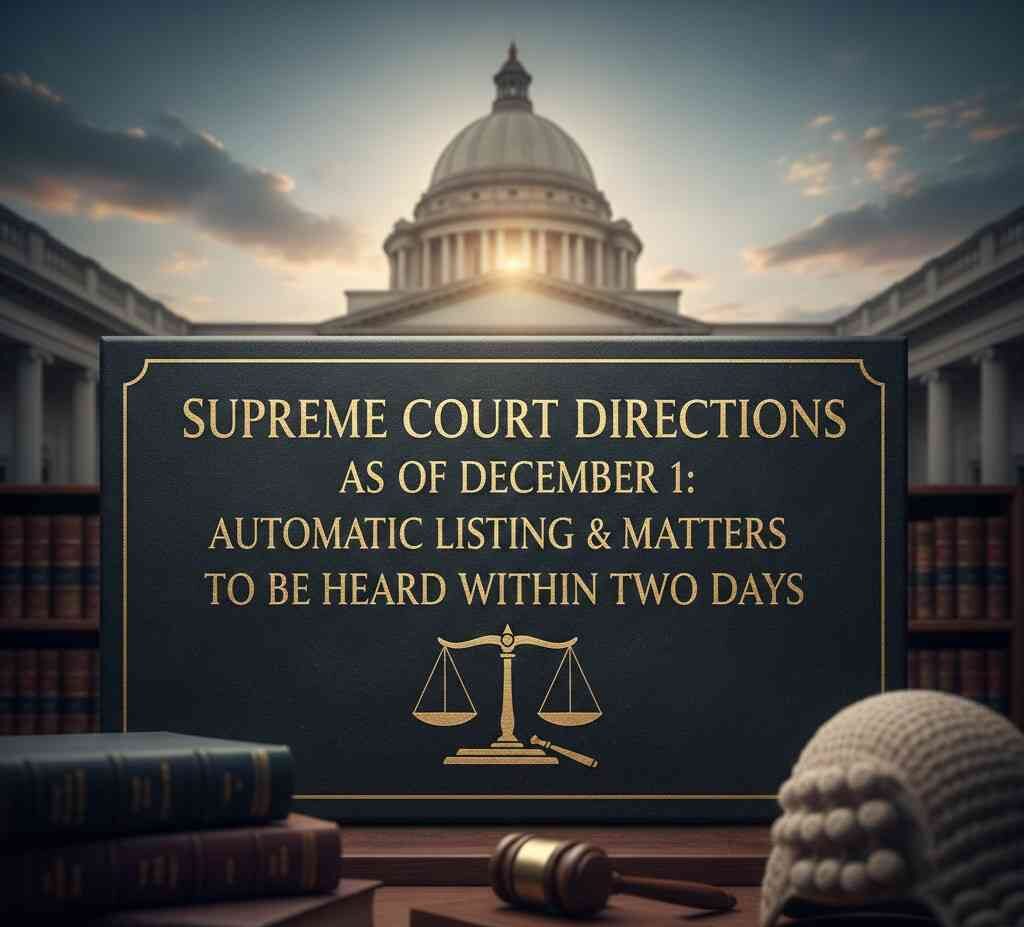
The Supreme Court of India has implemented new norms effective from December 1, which allow automatic listing for matters that got delayed and expeditious hearing of cases related to urgent liberty and transaction-oriented matters, and the plan is to reduce pendency by the introduction of pilot projects in certain states.
Introduction
In a significant administrative reform, the Indian Supreme Court has released new norms to help in making the process of hearing and listing cases systematic. These reforms, which came into effect on December 1, are meant to reduce pendency and minimize unnecessary ‘mentioning’ of cases. The reforms were approved by Chief Justice of India Surya Kant, who has advocated court efficiency and transparency.
Automatic Listing of Fresh Cases
Among the key changes is an automatic listing of new cases. It’s a new system: litigants need not mention the case before the court for listing. So far, parties or lawyers would have to apply (“mention”) to the court for urgent listing of their cases.
With the new guidelines:
- New cases will automatically be added and connected once the defects are remedied and verified.
- This saves time and avoids the backup in the courtroom due to daily mentions.
This development permits more streamlined case handling and reduces procedural blockages.
Immediate Liberty-Related Matters May be Heard in Two Working Days
The Court has made clear that cases about personal freedom are significant. According to the circular:
All fresh cases verified concerning personal liberty relating to the detention, where an interim relief is sought for release on bail or parole, till the next date shall be considered.
Such cases may include:
- Bail petitions
- Matters relating to unlawful detention
- Urgent stay applications affecting liberty
This is to avoid any delay of justice, especially when it comes to the accused being detained.
Special Measure in Case of Extreme Urgency
To accommodate quarter-hour emergencies that are truly dire and cannot wait until the docketed listing, the court has created a special 30-minute period:
Requests will be accepted from 10:00 AM to 10:30 AM.
This includes special cases such as:
- Anticipatory bail
- Death penalty cases
- Habeas corpus petitions
- Eviction or dispossession
- Demolition matters
This process ensures that judicial attention is focused immediately to avoid irreparable damage.
Advance Copy Required in Bail Cases
The new instructions urge the following to ensure bail hearings are conducted quickly:
Bail petitions must be served in advance to the nodal officer or standing counsel representing the respondent party (Union, State, UT).
This saves time and means that the state is ready for the hearing.
This shift is intended to expedite bail decisions, one of the biggest drivers of case volume.
Motivating Junior Lawyers for Oral Mentioning
To foster young advocates and expedite the hearing of a case:
- Oral mentions by senior counsel in any court shall not be allowed.
- Junior lawyers are encouraged to handle emergency mentions.
This echoes the CJI’s focus on encouraging younger members of the legal fraternity.
Old Regular Hearing Cases Not to be Adjourned Through Letters
Strict approach: To deal with the problem of long pendency, the court has taken a strict stand:
- The adjournment through letter on the old regular hearing cases will not be permitted.
- Parties must be ready to go on the scheduled date.
This aims to curb frivolous adjournment requests and help clear case backlogs.
Conclusion
The new Supreme Court rules are a major step toward a more efficient, transparent, and responsive judicial system. With automatic case listing, giving priority to liberty-related issues, eliminating procedural adjournments, and encouraging the participation of younger advocates, India is moving toward a modern, citizen-friendly justice framework. These reforms will significantly help clear the pendency and ensure timely hearings.
Frequently Asked Questions (FAQs) on New Supreme Court Directions Effective December 1
When do the new Supreme Court rules come into effect?
The new Supreme Court rules come into effect from December 1.
Is it still necessary for litigants to mention their cases for listing?
No. New cases will now be listed automatically.
What types of matters qualify as exceptionally urgent?
Anticipatory bail, death penalty, habeas corpus, eviction, and demolition cases fall under this category.
Can senior advocates still make oral mentions?
No. Only junior lawyers may make oral mentions in emergencies.