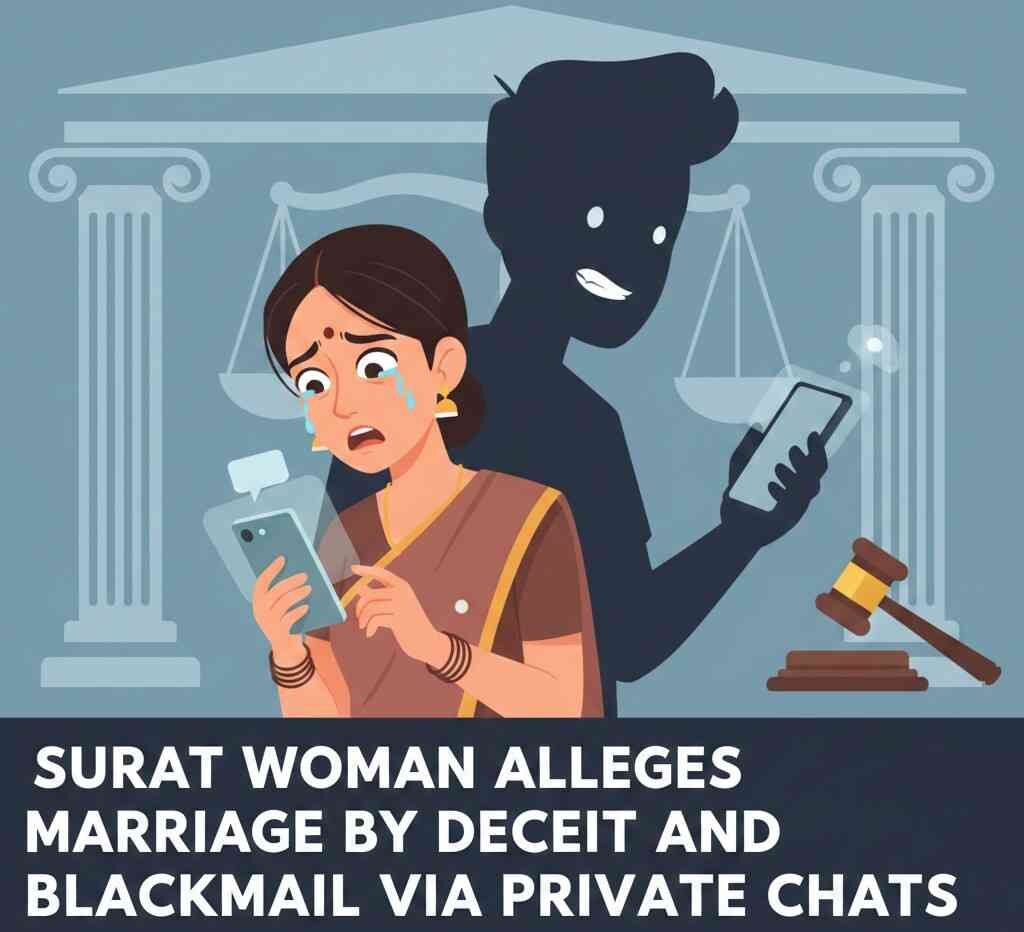
A 22-year-old woman in Surat has filed a police complaint accusing her neighbor of deceiving her into marriage and threatening to leak private chats and photos.
Case Overview
In Surat, Gujarat, a 22-year-old woman has lodged a police complaint against her neighbor and his family, alleging that she was tricked into marriage and later threatened with the circulation of her private chats and morphed images. The complaint has gone viral online, highlighting issues of consent, deceit, and cyber harassment in modern relationships.
Timeline of Events
- Marriage Under Alleged Deceit
The woman claims that she was married in a temple ceremony in Bharuch, Gujarat, without her family’s full consent. She alleges the groom and his family intentionally withheld key information, which influenced her decision to agree to the marriage. - Refusal to Provide Marriage Proof
According to her complaint, the man refused to share the marriage certificate and photos with her family. This lack of transparency raised doubts about the authenticity and intentions behind the marriage. - Discovery of Concealed Past
The woman later learned that the man had an undisclosed prior relationship, prompting her to seek a divorce. - Threats Using Private Material
After she expressed her desire for divorce, the accused and his family allegedly threatened to leak private chats and morphed photos or videos to her family and social circles to coerce her into staying in the marriage. - Public Embarrassment
Some private content was reportedly shared with relatives and neighbors, intensifying her distress and social humiliation.
Legal Action Taken
The Surat police have registered a case against the accused and family under various sections of the Bharatiya Nyaya Sanhita (BNS). The charges could include:
- Fraud and deception: Using deceit to enter into a marriage.
- Criminal intimidation: threatening the victim with private information to control her decisions.
- Defamation: Circulating private material to harm the victim’s reputation
The case highlights that these acts of fraud and blackmail, or failure to protect privacy, can be very serious features in Indian personal law.
Understanding the Bharatiya Nyaya Sanhita (BNS)
The BNS (2023), which took an overhaul of the Indian criminal law system to address a range of contemporary personal and digital interactions. Key provisions in the case were:
Section 69 (Marriage by Fraud): It deals with marriages procured through pretenses or misinformation.
Protection from Intimidation and Violation of Privacy: Crimes related to intrusion within private conversation or intimate content are criminalized.
These laws also represent India’s perspective on consent, privacy, and dignity in marriages and personal relations.
Why This Case is Significant
The case has been widely covered across the country because:
- Allegations of deception in marriage.
- Blackmailing with the help of private digital content.
- Legal consequences according to today’s BNS law.
- A wider conversation about consent, privacy, and cyber harassment in India.
FAQs: Surat Woman Alleges Marriage by Deceit and Blackmail via Private Chats
What is “marriage by deceit”?
Marriage by deceit occurs when one party enters into marriage based on false information or the concealment of important facts. It can be a criminal offense if proven in court.
Can hiding a marriage certificate be a crime?
Yes. Intentionally withholding proof of marriage can support charges of fraud or deceit, especially when used to mislead or manipulate the spouse.
Are threats with private chats or photos illegal?
Absolutely. Using personal or intimate content to coerce or intimidate someone violates criminal intimidation and privacy laws.