What Happens If You Don’t Pay a Loan in India? Know penalties, legal action, property seizure under SARFAESI Act, 2002, and your rights.
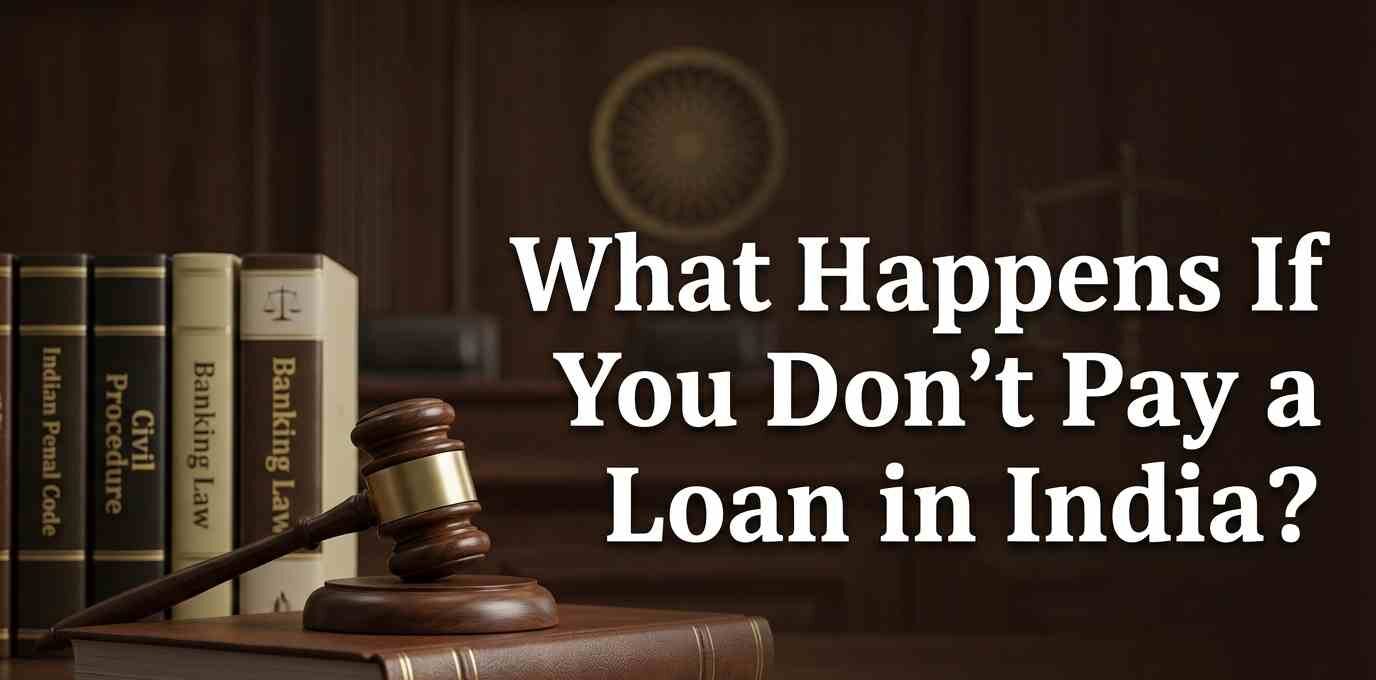
What Happens If You Don’t Pay a Loan in India? Complete Legal Guide (2026)
Failing to repay a loan in India is a situation many borrowers fear, yet it is more common than often assumed. Whether due to financial hardship, job loss, business failure, or unexpected emergencies, missing loan payments can trigger a chain of financial and legal consequences. However, it is important to understand that Indian law provides a structured recovery process and also protects borrowers from unfair practices.
This comprehensive guide explains in detail what happens if you don’t pay a loan in India, including legal actions, penalties, borrower rights, and practical solutions.
Understanding Loan Default in India
A loan default occurs when a borrower fails to make scheduled repayments (EMIs) as agreed in the loan contract. Loans can include:
- Personal loans
- Home loans
- Car loans
- Credit card dues
- Business loans
When you miss one EMI, it is considered a delay, but repeated non-payment leads to default.
Immediate Consequences of Missing Loan Payments
Late Payment Charges and Penal Interest
Banks and NBFCs impose penalties immediately after a missed EMI. These include:
- Late payment fees
- Additional penal interest
- GST on penalties
Over time, this increases your total outstanding amount significantly.
Negative Impact on Credit Score
Your repayment behavior is reported to credit bureaus like CIBIL. Even a single missed EMI can reduce your credit score.
Long-term effects:
- Difficulty getting future loans
- Higher interest rates
- Rejection of credit cards
A poor credit score can affect your financial credibility for years.
Reminder Calls and Recovery Follow-ups
Initially, lenders will try to contact you through:
- Phone calls
- SMS reminders
- Emails
If the delay continues, the tone may become more serious, and recovery teams may get involved.
When Does a Loan Become NPA?
If you fail to pay EMIs for 90 days, your loan account is classified as a Non-Performing Asset (NPA).
Once this happens:
- The bank categorizes your account as risky
- Recovery actions become more aggressive
- Legal proceedings may begin
Legal Action by Banks and Financial Institutions
Legal Notice
After prolonged default, the lender sends a formal legal notice demanding repayment within a specific time.
Ignoring this notice can lead to further legal steps.
Civil Recovery Case
Banks may file a civil suit in court to recover the outstanding amount. The court may:
- Order repayment
- Allow attachment of assets
- Pass a decree against the borrower
Action Under SARFAESI Act, 2002
For secured loans (home, car, property loans), banks have powerful rights under this law.
Process under SARFAESI:
- Bank issues a 60-day notice
- If unpaid, bank takes possession of the asset
- Asset is auctioned to recover dues
This process often does not require court intervention.
What Happens to Secured Assets?
If your loan is backed by collateral:
- Your house, car, or property can be seized
- The bank can auction it publicly
- Any remaining dues may still be recoverable
This is one of the most serious consequences of default.
Credit Card Default: A High-Risk Situation
Credit card defaults are particularly dangerous due to:
- Extremely high interest rates (30–40%)
- Compounding penalties
- Aggressive recovery
Banks may also initiate legal proceedings if dues remain unpaid.
Can You Be Arrested for Not Paying a Loan?
In most cases, no.
Loan default is a civil matter, not a criminal offense.
However, arrest may happen if:
- Fraud is involved
- You intentionally cheat the lender
- You issue a cheque that bounces
This is governed under the
Negotiable Instruments Act, 1881
Important Case Law Protecting Borrowers
ICICI Bank v. Prakash Kaur
This landmark case addressed the issue of harassment by recovery agents. The Supreme Court strongly condemned banks for using forceful and illegal methods to recover loans.
The Court ruled that:
- Recovery agents cannot use threats or violence
- Borrowers have a right to dignity and privacy
- Banks must follow lawful procedures
This judgment ensured that recovery practices in India remain regulated and humane.
Rights of Borrowers in India
Even if you default, you are protected by law:
- Right to receive proper notice before action
- Protection against harassment
- Right to fair valuation of property
- Right to legal remedy
Banks must follow due process at every stage.
Practical Solutions If You Cannot Repay
Communicate with the Lender
Ignoring the problem makes it worse. Inform your bank early.
Loan Restructuring
Banks may:
- Reduce EMI
- Extend repayment tenure
- Offer temporary relief
One-Time Settlement (OTS)
You can negotiate to pay a reduced lump sum amount to close the loan.
Debt Consolidation
Combining multiple loans into one can reduce financial burden.
Legal Assistance
A lawyer can help you:
- Negotiate with lenders
- Challenge illegal actions
- Protect your rights
Common Mistakes to Avoid
- Ignoring bank notices
- Avoiding communication
- Taking new loans to repay old ones
- Signing documents without understanding
Long-Term Impact of Loan Default
Loan default can affect your life beyond immediate finances:
- Difficulty renting property
- Trouble getting business loans
- Negative financial reputation
- Stress and legal complications
Conclusion
Not paying a loan in India can lead to serious consequences, including financial penalties, legal action, and loss of assets. However, it is important to remember that borrowers are not without rights. Indian law ensures a fair balance between recovery and protection.
The key is to act early, communicate with lenders, and explore available solutions. With the right approach, even a difficult financial situation can be managed effectively.
Frequently asked questions:
Can you go to jail for not paying a loan in India?
No, loan default is a civil matter. However, criminal action may arise in cases involving fraud or cheque bounce under the Negotiable Instruments Act, 1881.
After how many days loan becomes NPA?
A loan is classified as a Non-Performing Asset (NPA) after 90 days of non-payment.
Can bank take my property?
Yes, for secured loans, banks can seize and auction property under the SARFAESI Act, 2002.
Can recovery agents harass me?
No, recovery agents cannot harass or threaten you. The Supreme Court in
ICICI Bank v. Prakash Kaur
clearly stated that recovery must follow legal and ethical practices.
What should I do if I cannot repay my loan?
You should immediately contact your bank and explore options like loan restructuring, EMI reduction, or settlement. Ignoring the issue can worsen the situation.