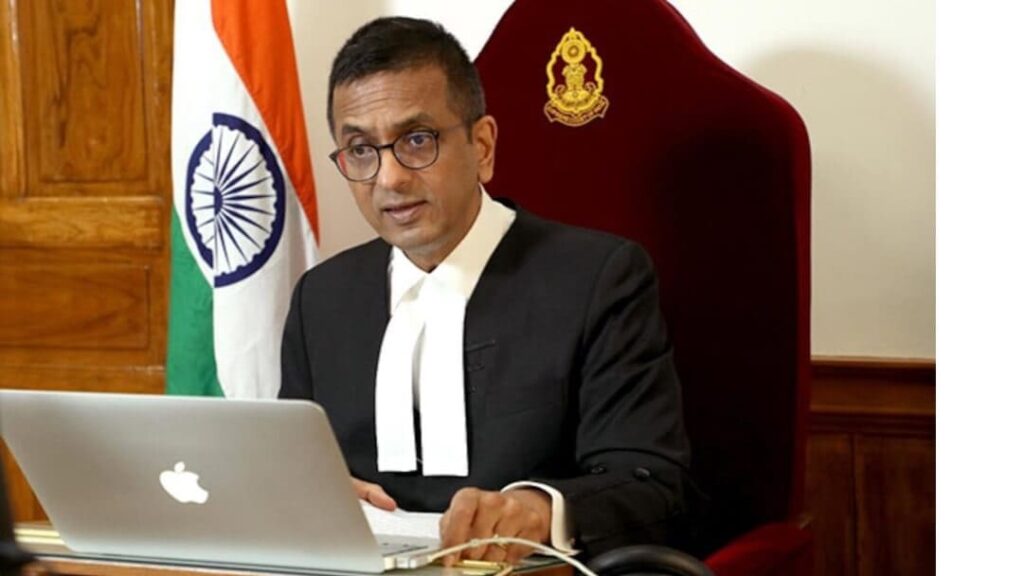

SC of India & Apex Court of Bhutan sign MoU for Exchange of Young Law Clerks: The Supreme Court of India and Bhutan’s apex court have entered into a historic MoU for an exchange programme for young law clerks. Discover how this work contributes to collaboration between courts, the development of legal skills, and cross-border professional development.
Introduction
The prosecutor’s office is a major custodian of the rule of law, constitutional values, and democracy. In a more closely connected world, courts are communities self-participating in international collaboration and exchanges of information. The exchange of young law clerks, which is one step in this direction, has been formalized through the signing of an MoU between the Supreme Court of India and the Supreme Court of Bhutan.
This accord represents a significant achievement in judicial diplomacy between the two neighboring states. The MoU is intended to strengthen the institutional network through the exchange of legal knowledge and best practices, and also benefit from joint actions between the apex courts in India and Argentina to promote cooperation on various aspects of the administration of justice that could contribute to the development of their respective judicial systems.
Deciphering the MoU: What It Is and Why You Should Care
A memorandum of understanding is a document describing a bilateral or multilateral agreement between parties, indicating an intended common line of action. Here MoU provides a formal mechanism for young law clerks of Bhutan to work in the Supreme Court of India for a limited period.
This MoU does not serve just a symbolic role. It demonstrates a pragmatic support for judicial collegiality, professional development, and cross-border fertilization of legal ideas. By concentrating on young law clerks, the deal aims at the next generation of jurists, academics, and lawyers.
Principal Elements of the Law Clerk Exchange Programme
Selection of Law Clerks
Two young law clerks from Bhutan would be chosen under the programme. They should be of high quality and have an interest in judicial research and constitutional law.
Duration of the Exchange
The chosen clerks will serve at the Supreme Court of India for 3 months. It is programmed to be long enough to have some meaningful exposure but not so much as to scar their longer-term career plans.
Nature of Work
During their stints, the clerks will help judges and benches in conducting legal research, analyzing cases, drafting briefs, and making sense of intricate legal points. They are attached to various benches to get some idea of how the court functions.
Financial Support
The visiting clerks will be paid the same honorarium as Indian law clerks. The Supreme Court of India will also pay for their travel, so the financial situation would not be an impediment to participation.
Professional Exposure
Clerks will be exposed to the constitutional setup of India, court processes management, and work at an apex court that is one of the busiest courts in the world.
Role of Law Clerks in an Apex Court
Law clerks are critical to the functioning of contemporary courts. They may not decide cases, but they are needed to ensure that decisions are well-informed and soundly made.
Law clerks of a court of last resort, like the Supreme Court of India, would usually aid judges in:
- Carrying out extensive legal and constitutional research
- Studying precedents and comparative jurisprudence
- Summarising pleadings and arguments
- Preparing research notes and case digests
- Helping to explain the complex factual and legal issues
The law clerks training at the SC will have an opportunity to experience these duties and responsibilities in a high-volume, high-impact judicial environment through the MoU.
Strengthening India–Bhutan Judicial Relations
India and Bhutan have a tremendous relationship, which is based on mutual trust, respect for each other’s interests and understanding, cooperation, and support for each other. This relationship acquires a different and substantive dimension thanks to the judicial cooperation.
In this MoU, both sides reiterate their mutual respect for the rule of law and institution-building. The programme fosters sustained interaction between the legal professionals by facilitating dialogue on constitutional values, judicial ethics, and good practices.
It also encourages mutually respectful relationships between institutions and establishes professional networks for the long term, which can be of mutual benefit to both judiciaries in the future.
Benefits for Young Legal Professionals
A key feature of this MoU is the focus on early-career lawyers. Participating clerks stand to gain in a variety of ways:
- Clinical Learning: Observation of practical court work adds value to learning the theoretical aspect of law.
- Comparative Perspective: Clerkships provide a look at how other legal systems apply constitutional principles and settle controversies.
- Professional Development: Employment in a foreign apex court helps extend research, legal draughtsmanship, and power analysis.
- Career Boost: International exposure is a CV booster for those pursuing careers in academia, litigation, and public service.
For many young lawyers, such opportunities are life-changing and help to define their professional future.
Knowledge Sharing Between Legal Systems
India and Bhutan share a border, but their laws related to wildlife have taken different paths over time. India is a common-law country with a voluminous amount of constitutional and statutory judgments, while Bhutan has paramount ascendancy over its own distinct cultural and historical practices.
The law clerk exchange encourages:
- Sharing of judicial research methodologies
- Disclosure of various theories of constitutional interpretation
- Sharing your experiences in case management and court administration
- Development of comparative legal understanding
This cross-fertilization of ideas is beneficial to both systems and helps promote more thoughtful judicial analysis.
Contribution to Judicial Capacity Building
The development of judicial capacity is a major preoccupation of the courts worldwide. Growing caseloads, more complicated issues, and novel legal problems all demand learning and adaptation.
The MoU reinforces capacity building through:
- Educating young professionals who might later become judges or legal scholars
- Promoting research-oriented judicial assistance
- Encouraging international best practices
- Strengthening institutional knowledge through collaboration
In the long run, such projects can enhance judicial productivity, quality of decisions, and public confidence in the judiciary.
Implication for Regional Legal Cooperation
The India–Bhutan law clerk exchange can serve as a model for regional cooperation in South Asia when it comes to the judiciary. It provides a model of how courts can work together outside formal treaties to foster learning, transparency, and respect for each other.
This model may have the capacity to influence other such projects with neighboring countries (which could lead to a more cooperative and educated legal environment in the region).
Conclusion
The MoU between the Supreme Court of India and its Bhutanese counterpart for the exchange of young law clerks is a novel idea where judicial diplomacy meets professional growth. It is an expression of a common understanding about our approach to learning and working together and of respect for the rule of law.
By unlocking the doors of cross-border learning for young legal minds, the programme enhances bilateral relations and furthers the development of judicial systems in both nations. Over the long term, these collaborations contribute to a better-informed, more skillful, and globally aware legal force—a critical building block of justice in today’s era.
Frequently Asked Questions (FAQs): Supreme Court of India–Bhutan Law Clerk Exchange MoU
What is the fundamental purpose of the MoU between India and Bhutan?
The aim is to further cooperation between judiciaries and to offer young lawyers a cross-border experience through a systematized exchange of law clerks.
Who is eligible for the exchange program?
Those who benefit directly are young law graduates and early-career legal professionals chosen to be law clerks. More indirectly, both judicial institutions benefit from a common understanding and experience.
How long do law clerks work in the Supreme Court of India?
The exchange programme enables the clerks to work at the Supreme Court of India for three months
Where are the clerks in the programme paid for?
Yes. The clerks are remunerated at par with Indian law clerks, and their travel is reimbursed by the hosting institution.