
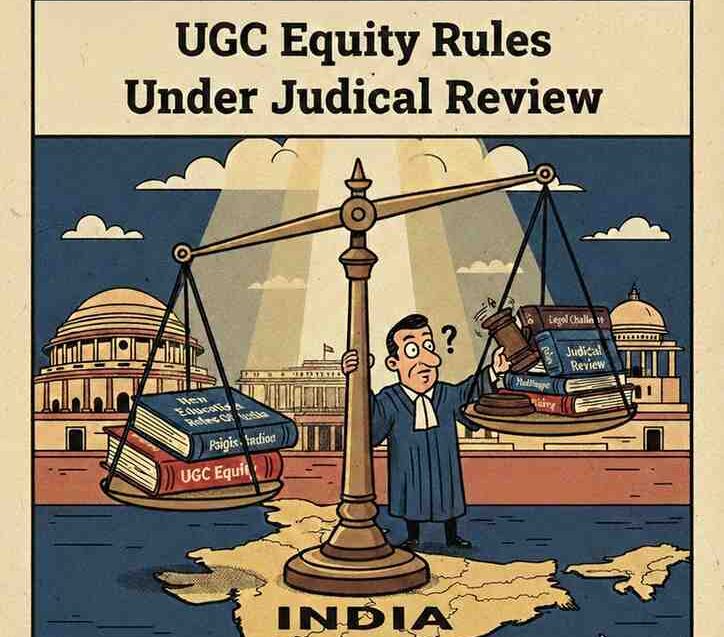
The new equity rules of the UGC to curb discrimination in higher education have already faced legal challenges and campus resistance.
Introduction
Image of higher education now UGC has not too long ago brought equity based regulation for Higher Institutions of learning all over India. These regulations, which are designed to reinforce anti-discrimination procedures at universities, have become deeply controversial rapidly. The regulations have been met with lawsuits, student protests and academic criticism in the days since they were notified, leading to significant questions about their scope, fairness and constitutional propriety.
The issue has now become a subject matter of judicial intervention, with writ petitions having been filed before constitutional courts, thereby making it an important addition to India’s education as well as constitutional law spectrum.
What Are the New UGC Rules For Equity?
The fresh notified equity guidelines envisage a structured way to deal with discrimination in colleges and universities. The rules require schools to establish procedures for addressing discrimination.
The Rules include in particular the following:
- Mandatory Equal Opportunity Cells in higher education institutions
- Special boards to look into complaints of discrimination
- Time-bound procedures for grievance redressal
- Obligatory reporting and surveillance of equity concerns
UGC has said these were aimed at ensuring equitable opportunities for access, dignity and freedom from discrimination and harassment for SC/ST students.
Why UGC Equity Guidelines Have Created a Storm?
Despite their stated objective, the equity rules have drawn criticism from multiple stakeholders. The opposition stems not from the idea of equity itself, but from how the regulations have been framed and implemented.
Narrow Definition of Discrimination
The definition of discrimination is one of the most contentious parts of the rules. Its detractors say it seems to restrict recognition of caste-based discrimination to certain categories and excludes other groups that may also experience unfair treatment.
This picking and choosing, opponents of these arbiters argue, violates the larger constitutional principle of equality before law.
Lack of Protection from False Complaints
Critics, including legal scholars and professors, worry the policy offers no real protections in cases of false or malicious claims. Unlike in other regulatory regimes, the equity rules do not make clear what penalties would be imposed for abuse, raising concerns about reputational damage and administrative overreach.
Due Process and Fairness Concerns
Another significant reservation is based on procedural fairness. Those critics contend the inquiry process under the rules:
- Lacks clearly defined standards of evidence
- Provides limited protection to the accused
- Does not adequately explain appeal mechanisms
These gaps, according to petitioners, could violate principles of natural justice.
Legal Challenge: What’s Playing Out in Court?
The controversy has now landed in court, with petitions filed to annul the equity rules. The key legal arguments include:
- The rules themselves are arbitrary and only applied discriminately
- Some of the provisions are in breach of Article 14 (Equality before Law) of the Constitution
- It’s possible that the UGC had acted beyond its mandate as prescribed by law in the UGC Act.
- The regime also produces unequal remedies for people in similar positions
Petitioners are now asking for the court to review such regulations and in some cases halt their implementation until constitutional concerns can be addressed.
Academic and Student Reactions
The reaction on college campuses has been mixed.
- Some student groups and faculty members defend the rules, characterizing them as a long-overdue step toward holding institutions accountable.
- Critics meanwhile worry that the rules will exacerbate social divides, inhibit free academic discussion and create an atmosphere of perpetual monitoring.
Protests and debates on campuses reflect the deep division over the new norms.
What Is at Stake?
The result of this lawsuit might have far-reaching effects on:
- How India talks about equity and inclusion
- Justice relative to social structure and procedure
- Regulatory Functions of the UGC.
- Campus governance and student rights
The Courts will have to draw a balance between the concerns for protecting most vulnerable sections and maintaining constitutional balances among all stake holders.
Conclusion
The legal contestation of the UGC’s norms for reservation reminds us of the difficulty and possibility of enforcing social justice within a constitutional framework. The ultimate objective of eradicating discrimination in higher education is widely accepted, but the present polemics serve as a reminder about the merits of inclusive drafting with clear procedurals and constitutional compliance.
As the courts take up the matter, their decision will shape not only the future of these regulations but also the broader national discourse on equity and governance in Indian higher education.
Frequently Asked Questions: UGC Equity Rules Under Judicial Review
What are the UGC equity guidelines?
These are guidelines established by the UGC to curb and end discrimination in higher educational institutions through proper grievance redressal.
Why are there legal challenges to the rules?
Petitioners contend that these rules are discriminatory, fail to prevent their misuse, and contravene constitutional principles of equality and due process.
Have the court’s rules been stayed?
Currently the rules are before the courts. Any stay or alteration will be based on court orders in the future.
What could happen next?
The court can either rule in favour of validity of rules, declare certain provisions unconstitutional or order UGC to amend the same so that they do not conflict with the Constitution.