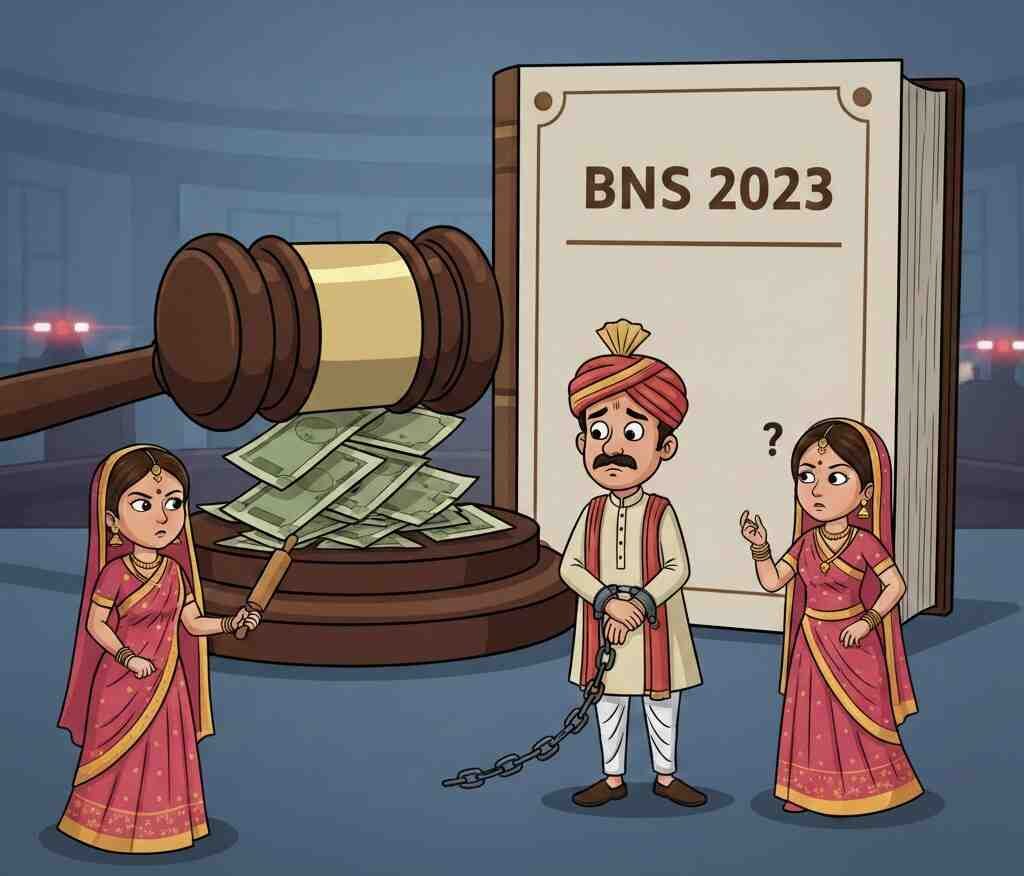
Divorce laws in India have undergone significant transformation, especially with evolving judicial interpretations up to 2026. Courts today are not only interpreting statutes but also shaping family law through progressive judgments that emphasize fairness, dignity, and practical justice.
This comprehensive guide explains divorce laws in India, including types, legal grounds, procedure, recent developments, and detailed landmark case laws.
Legal Framework Governing Divorce in India
India follows a religion-based personal law system:
- Hindu Marriage Act, 1955
- Special Marriage Act, 1954
- Muslim Personal Law
- Indian Divorce Act, 1869
- Parsi Marriage and Divorce Act, 1936
Despite different statutes, courts increasingly apply constitutional values like equality and individual dignity across all cases.
Types of Divorce in India
Mutual Consent Divorce
Mutual divorce is the simplest and fastest method where both spouses agree to dissolve the marriage.
Key requirements:
- Mutual agreement
- Separation for at least one year
- Settlement of financial and custodial issues
Legal Evolution Through Case Law:
Amardeep Singh v. Harveen Kaur
This landmark judgment changed how mutual consent divorce works in India. Earlier, couples had to mandatorily wait for six months after filing the first motion before seeking final divorce. This waiting period often prolonged emotional distress, especially where reconciliation was impossible.
In this case, the Supreme Court recognized that forcing couples to wait unnecessarily defeats the purpose of justice. It held that the cooling-off period is not mandatory but directory, meaning courts can waive it in appropriate cases.
The Court laid down clear conditions for waiver:
- Parties have been separated for a long time
- All disputes (alimony, custody, property) are settled
- No possibility of reconciliation exists
This judgment has made mutual divorce significantly faster and more humane, reducing unnecessary litigation and emotional burden.
Contested Divorce
When one spouse does not consent, divorce can be sought on specific legal grounds such as cruelty, adultery, desertion, or mental illness.
V. Bhagat v. D. Bhagat
This case is crucial in defining mental cruelty. The Supreme Court expanded the meaning of cruelty beyond physical harm to include emotional and psychological suffering.
The Court held that mental cruelty occurs when one spouse’s behavior causes such deep mental pain that living together becomes impossible. It includes:
- False allegations
- Public humiliation
- Continuous abusive conduct
This judgment made it easier for individuals to seek divorce in cases where harm is not physical but deeply emotional, reflecting a modern understanding of relationships.
Irretrievable Breakdown of Marriage
Although not formally codified, courts increasingly recognize this concept.
Naveen Kohli v. Neelu Kohli
In this case, the marriage had completely collapsed due to prolonged disputes and litigation. The Supreme Court observed that continuing such a marriage would only increase suffering.
The Court strongly recommended introducing irretrievable breakdown of marriage as a legal ground for divorce. It emphasized that law must reflect reality—if a marriage is beyond repair, it should be dissolved.
This case laid the foundation for future developments in divorce law.
Shilpa Sailesh v. Varun Sreenivasan
This Constitution Bench judgment marked a major shift. The Supreme Court held that it can directly grant divorce under Article 142 of the Constitution when a marriage is completely broken.
The Court clarified that:
- This power ensures “complete justice”
- It applies where reconciliation is impossible
- It avoids prolonged litigation
This decision reflects a progressive approach, prioritizing justice over rigid legal procedures.
Divorce Procedure in India
- Filing of petition
- Court notice to spouse
- Mediation attempts
- Evidence stage (if contested)
- Final judgment and decree
Time Required
- Mutual Divorce → 6–18 months (can be shorter after waiver)
- Contested Divorce → 2–5+ years
Alimony and Maintenance
Courts determine alimony based on fairness, considering income, lifestyle, and contributions.
Rajnesh v. Neha
This landmark judgment brought uniformity in maintenance laws. The Supreme Court introduced mandatory financial disclosure by both parties through affidavits.
Key contributions of this case:
- Prevents concealment of income
- Ensures fair maintenance calculation
- Recognizes homemakers’ contributions
It significantly improved transparency and consistency in alimony decisions.
Child Custody Laws
Courts follow the principle of child welfare above all else.
Gaurav Nagpal v. Sumedha Nagpal
This case established that custody decisions must prioritize the child’s well-being over parental rights.
The Court emphasized:
- Emotional and psychological welfare
- Stability and upbringing
- Best interests of the child
It rejected rigid rules and adopted a flexible, child-centric approach.
Latest Trends in Divorce Laws (2025–2026)
- Faster dispute resolution through mediation
- Increased recognition of mental cruelty
- Gender-neutral approach in some cases
- Growing acceptance of irretrievable breakdown
Common Mistakes to Avoid
- Filing without legal preparation
- Hiding financial details
- Ignoring mediation
- Relying on informal agreements
Documents Required
- Marriage certificate
- ID and address proof
- Income proof
- Evidence (if contested)
FAQs: Divorce Laws in India Explained (2026 Update): Complete Guide with Landmark Case Laws
Is mutual divorce faster?
Yes, especially after waiver of the cooling-off period.
Can courts grant divorce without consent?
Yes, through contested divorce.
Is irretrievable breakdown a legal ground?
Not codified, but recognized by courts.
Conclusion
Divorce laws in India in 2026 reflect a shift toward practical justice, individual dignity, and faster resolution. Landmark judgments have played a crucial role in modernizing family law, ensuring that legal processes align with real-life situations.
Understanding these laws and judicial trends can help individuals navigate divorce with greater clarity and confidence.