
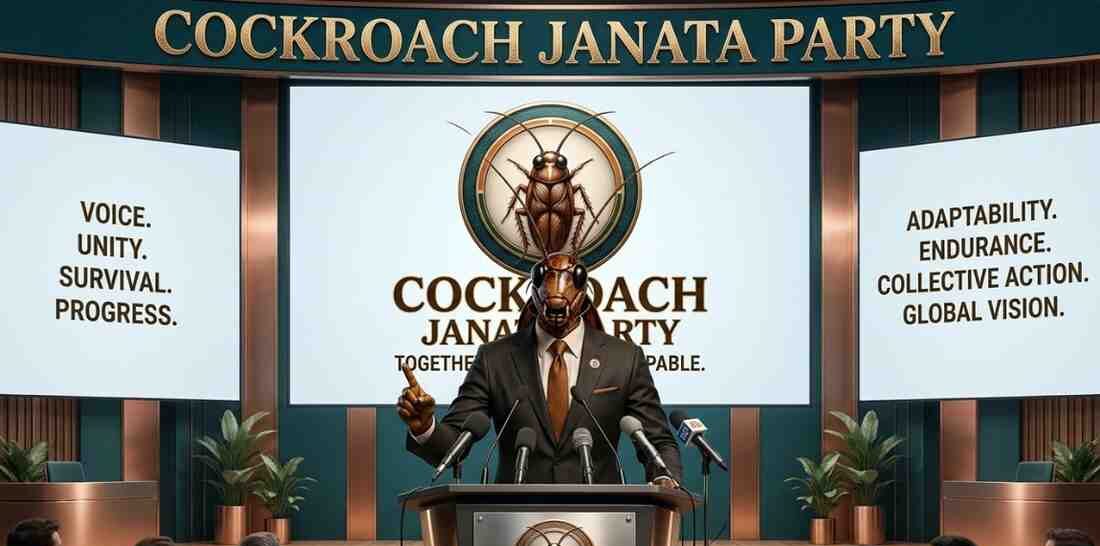
Explore the legal implications of the viral Cockroach Janta Party movement in India. Understand online political expression, free speech, digital activism, and emerging legal questions surrounding internet-driven political participation.
Focus Keywords:
Cockroach Janta Party, digital political movements India, online political expression law, freedom of speech India, political satire law, internet activism India, constitutional rights India
Cockroach Janta Party and Online Political Expression in India: Legal Questions Around Digital Movements
The internet has transformed political engagement across the world, and India is no exception. Social media platforms now influence public opinion, create political communities, and provide young citizens with opportunities to participate in discussions that were once limited to traditional political spaces. Recently, a viral movement known as the “Cockroach Janta Party” (CJP) gained significant public attention after online reactions emerged around controversial remarks linked to the Indian judiciary and public discourse concerning youth.
While many initially viewed the movement as internet humor or political satire, its rapid growth raised important legal and constitutional questions. Can online communities evolve into real political platforms? What legal protections apply to digital political expression? Where does freedom of speech end and regulatory oversight begin?
This article examines the legal dimensions of internet-based political movements and the broader constitutional issues surrounding digital political participation in India.
Rise of Digital Political Communities
Modern political participation is no longer limited to rallies, campaigns, or party offices. Social media platforms have become powerful spaces where citizens share opinions, criticize institutions, and organize communities around common concerns.
Young people, particularly members of Generation Z, increasingly use digital platforms to discuss topics such as:
- Employment opportunities
- Economic challenges
- Political representation
- Government accountability
- Social justice issues
Movements born online often begin as memes, satire, or public reactions to specific events. However, internet culture has repeatedly shown that even humorous or symbolic campaigns can evolve into serious public discussions.
The emergence of online political communities demonstrates a shift in how democratic participation is taking place in India.
Freedom of Speech Under the Indian Constitution
The legal foundation for political expression in India is found under Article 19(1)(a) of the Constitution of India, which guarantees citizens the right to freedom of speech and expression.
This constitutional protection allows individuals to:
- Express political opinions
- Criticize public authorities
- Participate in public debate
- Support or oppose policies
- Engage in political satire
Political criticism has traditionally received broad constitutional protection because democracy relies upon open discussion and differing viewpoints.
However, this right is not absolute.
Article 19(2) allows the government to impose reasonable restrictions on certain grounds including:
- Public order
- Defamation
- Security of the state
- Incitement to offences
- Morality and decency
- Sovereignty and integrity of India
As a result, online movements and political campaigns must operate within these legal boundaries.
Political Satire and Its Legal Position
One of the interesting aspects of internet-based movements is the use of humor and satire. Political satire has long been part of democratic societies. Cartoons, parody campaigns, and symbolic expressions often communicate criticism in a manner that attracts wider public attention.
Indian courts have generally recognized that criticism and satire form part of protected expression. However, legal concerns arise if such content crosses into:
- Defamatory statements
- Hate speech
- False factual allegations
- Incitement of violence
Digital creators and organizers must therefore distinguish between criticism and unlawful conduct.
A satirical movement may enjoy constitutional protection if its purpose is commentary or expression rather than deliberate harm.
Can an Online Movement Become a Political Party?
Many people assume that any group attracting public attention automatically becomes a political party. Legally, however, the process is more structured.
Under Indian law, political parties seeking official recognition must comply with requirements established by the Election Commission of India.
Generally, registration may involve:
- Submission of organizational details
- Party constitution and objectives
- Office bearer information
- Compliance with electoral laws
- Financial and procedural requirements
A viral social media movement, regardless of popularity, does not automatically receive legal status as a recognized political party.
The distinction between an online community and a legally registered political organization remains important.
Legal Challenges Faced by Internet-Driven Political Movements
Digital political initiatives face unique legal challenges that traditional organizations may not encounter.
Misinformation Risks
Social media enables information to spread rapidly. Incorrect interpretations, edited content, or unverified claims can become widely circulated within hours.
If misinformation damages reputations or creates public disorder, legal consequences may arise.
Defamation Concerns
Political discussions often involve criticism of public figures and institutions. While criticism itself is generally lawful, knowingly spreading false allegations may trigger civil or criminal defamation claims.
Platform Regulations
Social media companies maintain community guidelines and content policies. Even lawful speech may face moderation if platforms believe content violates internal standards.
Data Privacy Issues
Digital campaigns frequently collect user information through websites, membership forms, or online communities. Organizers must ensure compliance with applicable privacy and data protection standards.
Digital Activism and the Future of Democracy
The emergence of internet-based political movements reflects changing democratic behavior rather than temporary social media trends.
Young citizens increasingly expect immediate engagement with public institutions and political systems. Digital platforms allow individuals to participate in discussions regardless of geographic location or social background.
At the same time, legal institutions face the challenge of balancing two important interests:
First, preserving constitutional rights such as freedom of expression and political participation.
Second, preventing misinformation, abuse, and unlawful activity.
As technology continues to reshape public discourse, lawmakers and courts may increasingly confront questions surrounding online political communities.
The future of democratic participation may not be limited to physical spaces. Digital communities are becoming an important part of modern civic life.
Conclusion
The attention surrounding the Cockroach Janta Party highlights a larger reality about contemporary India: internet culture and political engagement are increasingly interconnected.
Whether such movements remain symbolic or evolve into structured organizations, they raise important legal questions regarding constitutional freedoms, political participation, and the role of digital platforms in democratic systems.
India’s legal framework already provides protections for political expression through constitutional guarantees. However, the rapid growth of online activism will likely continue testing the balance between individual rights and regulatory responsibilities.
The conversation is therefore larger than any single movement. It concerns the future of democratic participation in an increasingly digital society.
Frequently Asked Questions (FAQs): Cockroach Janta Party and Online Political Expression in India
Is political satire legal in India?
Yes. Political satire generally falls within freedom of speech protections under Article 19(1)(a), provided it does not violate restrictions relating to defamation, hate speech, or public order.
Can an online movement become an official political party?
Yes, but it must satisfy legal requirements established by the Election Commission of India. Social media popularity alone does not create legal recognition.
Does freedom of speech in India have limits?
Yes. Article 19(2) permits reasonable restrictions on speech relating to public order, security, defamation, and other specified grounds.
Are memes and online political campaigns protected by law?
Many forms of political expression, including memes and satire, may receive constitutional protection. However, unlawful content can still face legal consequences.