
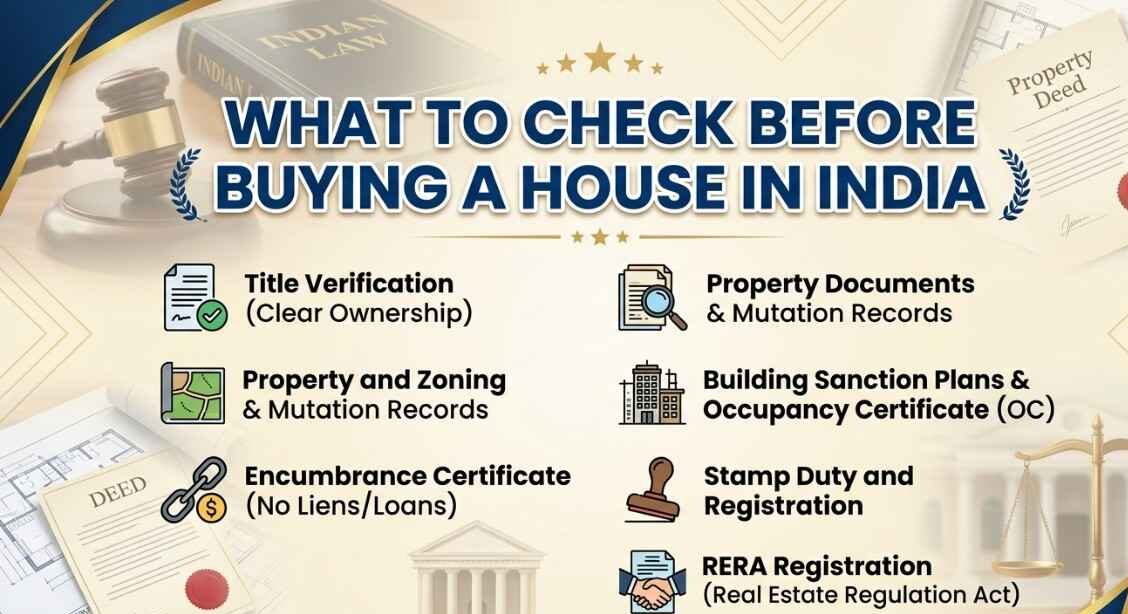
What to Check Before Buying a House in India? Planning to buy a home in 2026? Discover the complete checklist—legal documents, location, builder reputation, costs, and expert tips to avoid mistakes.
Buying a house is one of the most important financial decisions you will ever make. A single mistake can lead to legal disputes, financial losses, or long-term stress.
That’s why it is essential to carefully evaluate every aspect before finalizing a property purchase.
In this complete 2026 guide, you’ll learn what to check before buying a house in India, including legal documents, location, total cost, and hidden risks—so you can make a safe and smart investment.
Verify Legal Documents
Before anything else, ensure the property is legally clear and free from disputes.
Important documents to check:
- Title Deed – Confirms ownership of the property
- Sale Deed – Legal proof of sale transaction
- Encumbrance Certificate – Shows any loans or legal liabilities
- RERA Registration – Mandatory for new projects under Real Estate (Regulation and Development) Act, 2016
Always consult a property lawyer to verify documents and avoid fraud.
Check Location and Connectivity
The location of a property directly impacts your lifestyle and future resale value.
Things to consider:
- Distance from workplace, schools, and hospitals
- Availability of public transport
- Safety and neighborhood quality
- Upcoming infrastructure (metro, highways, malls)
A good location ensures convenience and long-term appreciation.
Builder Reputation and Track Record
If you are buying a newly constructed or under-construction property, research the builder thoroughly.
Check:
- Past projects and delivery timelines
- Construction quality
- Customer reviews and complaints
A reliable builder reduces the risk of delays and legal issues.
Calculate Total Cost
The actual cost of a house is more than just the listed price.
Additional costs include:
- Stamp duty and registration charges
- Maintenance fees
- Parking charges
- GST (for under-construction properties)
Always calculate the total cost before making a decision.
Home Loan and Financial Planning
If you are planning to take a home loan, plan your finances wisely.
Consider:
- Interest rates from different banks
- EMI affordability
- Loan tenure and eligibility
Ideally, your EMI should not exceed 30–40% of your monthly income.
Physical Inspection of the Property
Never rely only on photos or online listings.
Inspect carefully:
- Wall cracks or leakage
- Plumbing and electrical systems
- Ventilation and natural light
- Overall construction quality
Visit the property multiple times, at different times of the day.
Check Government Approvals
Ensure the property has all necessary approvals from local authorities.
Must-have approvals:
- Building Plan Approval
- Occupancy Certificate (OC)
- Completion Certificate (CC)
Buying a property without approvals can lead to legal trouble or even demolition.
Society Rules and Maintenance
If you are purchasing a flat or apartment, understand the society rules.
Check:
- Monthly maintenance charges
- Society regulations and restrictions
- Parking allocation
These factors affect your long-term living experience.
Evaluate Future Resale Value
Think long-term before investing in property.
Factors affecting resale value:
- Location growth potential
- Infrastructure development
- Demand in the area
A smart investment today can generate better returns tomorrow.
Common Mistakes to Avoid
Avoid these common errors when buying a house:
- Not verifying the title deed properly
- Ignoring hidden charges
- Trusting the builder without research
- Skipping legal verification
- Overstretching your budget
Conclusion
Buying a house requires careful planning, legal verification, and financial clarity. By checking all the factors above, you can minimize risks and make a confident decision.
Remember: Never rush into a property purchase. Research thoroughly and seek expert advice when needed.
Frequently Asked Questions: What to Check Before Buying a House in India
What is the most important thing to check before buying a house?
The most important factor is verifying the legal ownership (title deed) and ensuring the property is dispute-free.
Is it safe to buy a property without RERA registration?
It is possible, but not recommended. Properties registered under Real Estate (Regulation and Development) Act, 2016 are more transparent and secure.
How much extra cost should I expect apart from the property price?
You should expect an additional 7%–12% for taxes, registration, and other charges.
How can I check if a property has legal disputes?
You can verify this through the Encumbrance Certificate and by consulting a legal expert.