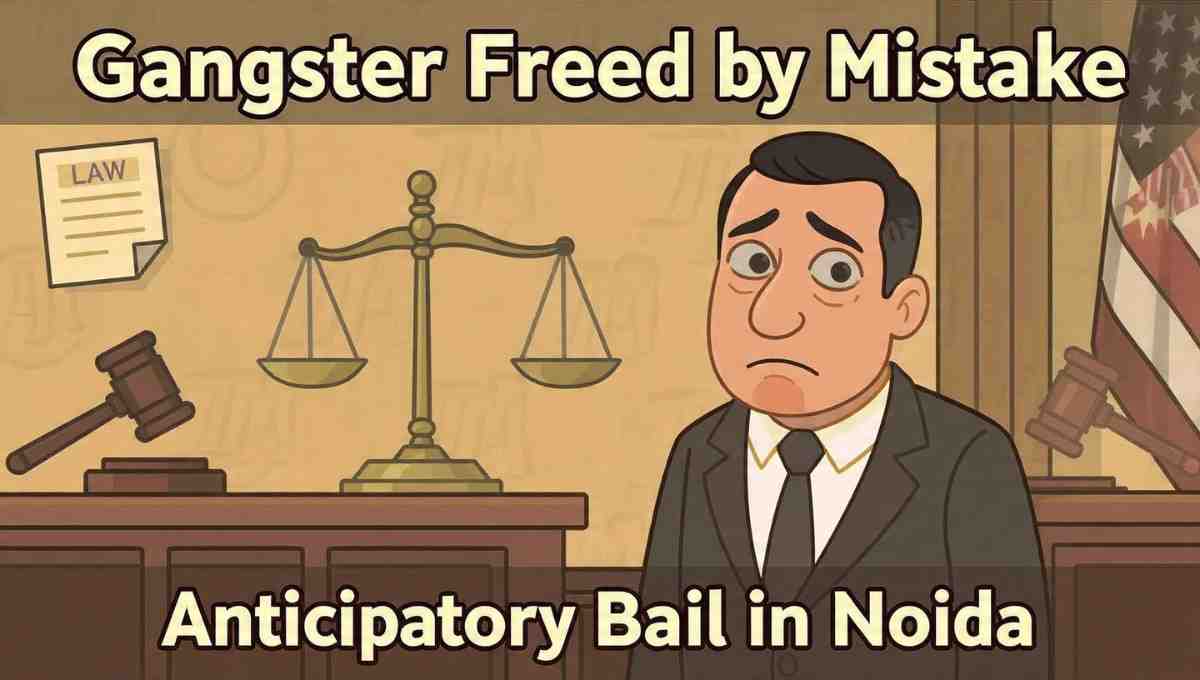
A Noida court gave anticipatory bail to gangster Ravi Kana, who was released by mistake from jail. Here’s a brief legal explainer on the case, the suspension of jail officials, sections involved under IPC and its larger ramifications on India’s criminal justice system.
Introduction
In a controversial move that has generated legal and administrative debate, a Noida court extended anticipatory bail to gangster Ravi Kana who was erroneously set free from jail and later booked under fresh charges including intimidation and extortion. The matter has raised serious questions regarding management of prisons, procedural lapses and the manner in which bail laws are applied in India.
This report discusses the case in detail, including the contours of the legal questions it presented, court reasoning and administrative procedure holding, and overall implications.
Who is Ravi Kana?
Ravi Kana is a criminal of a notorious repute in the entire Noida and western UP sector. He is said to have a record of criminal activities including extortion, intimidation and mob-related crimes.
Imprisoned on other charges, he was accidentally released from jail because of an administrative mistake, and the case drew national attention.
What Happened?
Ravi Kana was freed when a judge ruled against his detention following what police later described as a clerical or administrative error.
Key Developments:
- Prison officials were said to have misunderstood court papers.
- Release orders were processed incorrectly.
- The mistake was not found until after his release.
- The jail superintendent was later suspended pending investigation.
The case raises the issues:
- Verification mechanisms in prison administration
- Gaps in communication between courts and jail officials
- Internal compliance and accountability systems
New Case: Intimidation and Extortion
Ravi Kana was also booked subsequently again under the charges of:
- Criminal intimidation
- Extortion
- Threatening individuals
“Offences like these generally fall under the sections considering,” a provision of Indian Penal Code (IPC), according to:
- Extortion (Section 383 IPC)
- Criminal intimidation (Section 506 IPC)
Such charges were taken seriously by the police and the courts.
What is Anticipatory Bail?
Ravi Kana had filed an anticipatory bail application under section 438 of the code of criminal procedure (CrPC).
Legal Meaning:
Anticipatory bail is a type of legal protection supplied to an individual who foresees as that they might be arrested of non-bailable crime. The chief minister is released on bail, the person presiding at any rinkthouse shall admit him to bail.Jb.
Court’s Considerations:
When applying for an anticipatory bail, courts will usually look into:
- Nature and Gravity of the allegation
- Criminal antecedents
- Possibility of tampering with evidence
- Risk of absconding
- Cooperation with investigation
In these instances, relief was said to have been included during those court ruling but was conditional on cooperation with the investigation.
How did those with Background of Crime Get Anticipatory Bail?
This has been the question at the heart of public debate.
A lot of India’s supreme principles are legal ones:
- Bail is the norm, jail an exception (a principle enunciated by Supreme Court).
- All defendants are presumed innocent until and unless proven guilty.
- Bail determinations center on procedural protections, not public opinion.
And people with a past criminal record can also get bail if:
- All witnesses are in no immediate danger.
- The inquiry can also be earlier than arrest.
- The denial does not meet the legal grounds.
Suspension of Jail Superintendent
After the erroneous release, a jail superintendent was placed under suspension for departmental probe.
Possible Administrative Actions:
- Internal disciplinary proceedings
- Review of prison release protocols
- Strengthening verification mechanisms
- Digital tracking reforms
This kind of suspension is usually administratively preventative and does not mean being criminally culpable automatically.
Legal and Administrative Implications
This case highlights systemic concerns:
Prison Administration Oversight
Mistakes in releasing procedures not only shake people’s confidence but also could lead to potential risk to public safety.
Accountability in Custodial Systems
If found guilty of negligence or procedural lapses, officers could be fined or demoted to a lower rank.
Bail Jurisprudence Debate
The issue of what to do with the habitual offender frequently sparks conversation on:
- Bail reforms
- Stricter conditions for repeat offenders
- Balancing liberty with public safety
Broader Impact on Uttar Pradesh Law Enforcement
The incident places focus on:
- Collaboration from Courts to Jail Management
- Data management and documentation systems
- Criminal tracking mechanisms
In high stakes, high profile criminal cases, administrative accuracy is essential in order to prevent embarrassment and exposure.
Conclusion
The Ravi Kana incident is more than an error at release — it opens up broader questions on procedural safeguards, jurisprudence around bail and accountability of prison administration in India.
The anticipatory bail was granted on purely legal grounds but gross administrative negligence in letting him go free calls for scrutiny of institutional functioning. As inquiries carry on, this case might have a bearing on the debate around bail reforms and custodial supervision in India.
Frequently Asked Questions (FAQs): Gangster Freed by Mistake Gets Anticipatory Bail in Noida
Why is Ravi Kana out of jail?
He was freed after a procedural or clerical mistake by jail officials, the newspaper said.
What is anticipatory bail?
Anticipatory bail is a legal relief which is guaranteed before the person is actually taken into custody or arrested under Section 438 of the Code of Criminal Procedure (CrPC) for securing release on bail in the event of arrest.
Can anticipatory bail be cancelled?
Yes. The prosecution is also entitled to apply for Cancellation, if the accused disobeying bail conditions or hamper investigation.