The Orissa High Court held that a married daughter could not be refused appointment on compassionate ground when sons were considered eligible. Read a full legal explanation and the constitutional rationale.
Introduction
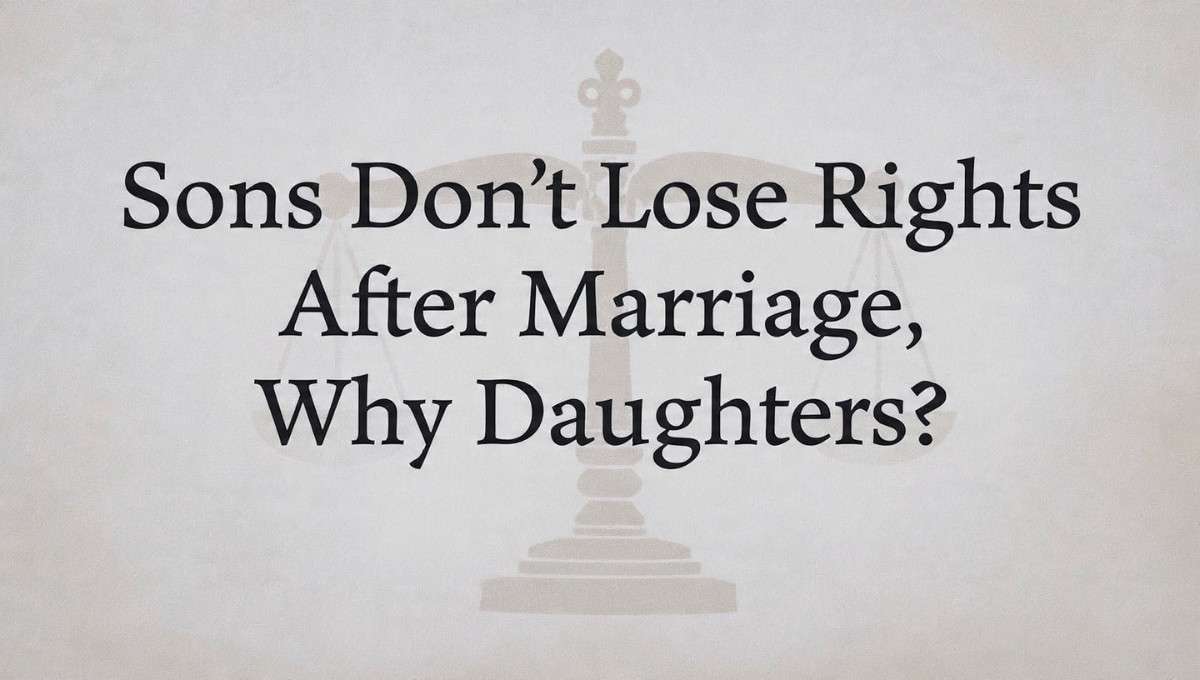
Breaking the age-old gender bias, the Orissa High Court ruled that a daughter would not be deprived off an opportunity of being considered for employment against a compassionate appointment on the ground of her marriage while relying on such consideration. The Bench came down heavily on the authorities for their “mindless and mechanical” refusal to grant compassionate job to a woman and said, “If the sons do not lose their right in such circumstances after marriage, there are no compelling reasons as to why it ought to be treated differently qua daughters.”
This ruling is grounded in constitutional principles of equality, dignity and non-discrimination and reflects a progressive judicial trend to disavow antiquated assumptions about women’s need for support long after marriage ends.
What Is a Compassionate Appointment?
Compassionate appointment is a provision under services rules for employment of dependent family member of deceased government servants.
The point is not merit-based employment, but immediate monetary succour to a family which has lost its wage-earner ‒ the only or at least primary income-earner that it had.
Key points:
- It is a matter of largesse and not a vested right.
- Eligibility is based on dependency and financial need, not gender.
- The scheme must be administered in an even-handed and constitutional manner.
Background of the High Court Orissa Case
In the matter pending before Orissa High Court:
- The death of a government employee while in service;
- His daughter requested for a job through the state’s Rehabilitation Assistance / Compassionate Appointment Scheme.
- Her application was turned down on the grounds that she was married.
- There was no such condition for married sons under the corresponding policy.
- The woman challenged the rejection saying that the rule was in blatant violation of her constitutional guarantee of equality.
Key Question Before the Court
The Court addressed one initial matter:
- Whether the State cannot refuse employment to such a daughter on compassionate grounds relating to appointment of sons after marriage?
Judicial Reasoning and Analysis
Marriage Does Not Break the Legal Identity of a Daughter
The Orissa High Court held that:
- Marriage does not terminate the legal or emotional relationship between a daughter and her parents.
- A daughter does not cease to be a member of her parental family after marriage.
- Presuming financial independence solely due to marriage is factually incorrect and constitutionally flawed.
The Court rejected the notion that a woman “belongs” exclusively to her matrimonial family after marriage.
Unconstitutional Discrimination On The Basis Of Gender And Marriage Status
It was held by the Court that refusal of compassionate appointment to married daughters:-
- Allowing married sons to claim compassionate appointment while denying the same to married daughters creates hostile discrimination.
- Such classification has no rational nexus with the objective of the scheme, which is to alleviate financial hardship.
- This unequal treatment fails the reasonable classification test under Article 14.
Violation of Articles 15 and 16
The denial was also found to be:
- Indirect gender discrimination under Article 15, and
- A denial of equal opportunity in public employment under Article 16.
The Court emphasised that public employment policies must align with the constitutional goal of substantive equality, not reinforce societal stereotypes.
The Correct Test Is Not Gender, but Dependency
The Court clarified that:
- The decisive factor in compassionate appointment is dependency and financial need, assessed at the relevant time.
- Marital status is, at best, a neutral fact, not a disqualifying condition.
- Authorities must conduct a fact-based inquiry, not rely on presumptions.
Court Complained of “Mindless” Administrative Action
The Court strongly criticised the authorities for:
- Blindly applying an outdated rule,
- Ignoring constitutional mandates and judicial precedents,
- Defeating the welfare purpose of the scheme.
Such administrative action, the Court noted, undermines public trust in governance.
Consistency with Broader Judicial Trends
The Orissa High Court’s ruling aligns with a growing body of jurisprudence across India where courts have:
- Recognised that gender-based exclusions in compassionate appointment schemes are unconstitutional;
- Rejected marital status as a standalone disqualifier for daughters;
- Emphasised gender neutrality and social reality in policy interpretation.
Impact of the Judgment
This decision:
- It reinforces gender-neutral understanding of rules relating to compassionate appointment.
- Sends a strong message to government agencies to modernize their outdated policies.
- Affirms that administrative convenience can’t be permitted to trump constitutional equality.
It carries forward a nice, strong line of decisions -across multiple High Courts – ruling that married daughters cannot be divested by force majeure.
Conclusion
Observation of Orissa High Court — “sons do not lose their rights after marriage why should daughters?” — is an indictment of institutional gender bias. Having jettisoned these obsolete doctrines and re-asserted constitutional equality, the Court has also made it clear that its tendering to anachronistic notions of maternal solicitude must necessarily accede to modern sensitivity as encapsulated in a constellation of contemporary values enshrined in the country’s Constitution.
This decision is another step toward efforts for real gender justice in public service.
Orissa High Court on Compassionate appointment FAQs
Are compassionate appointment a legal right?
No, Compassionate appointment is not a right fundamental or statutory. It is a welfare measure. But how it is used needs to respect constitutional values of non-discrimination and equality.
Can a married daughter be refused compassionate appointment?
No. On the other hand, the Orissa High Court observed that simply because a candidate has married is no reason for rejection particularly when the married sons are treated differently.
Which is more important — dependence or marital status?
Key factors are dependency and economic hardship. But being a woman or single cannot substitute for actually checking out the state of the family.